
Hospitality uniforms require a combination of garment design knowledge, fabric understanding and manufacturing consistency. Unlike ordinary clothing, hotel workwear must meet the practical needs of employees while maintaining a unified appearance across different departments.
A hospitality uniform manufacturer plays an important role in converting a hotel's brand identity into functional garments. The process involves understanding employee responsibilities, selecting appropriate materials, developing designs, confirming measurements and maintaining quality throughout production.
For hotels and hospitality businesses in Pune, understanding this process can make uniform procurement more organised and predictable.
Step 1: Understanding the Hotel's Requirements
Uniform manufacturing begins with identifying the requirements of the establishment.
A five-star property, business hotel, boutique hotel and budget accommodation provider may have very different expectations.
The manufacturer should understand:
The hotel's category and positioning.
Number of employees in each department.
Existing brand colours and design preferences.
Employee responsibilities.
Working conditions.
Uniform quantities and replacement needs.
This information provides a foundation for developing suitable garment designs.
Step 2: Department-Wise Design Development
A hotel normally requires several uniform categories.
Each department has different responsibilities, so the design must reflect the nature of the work.
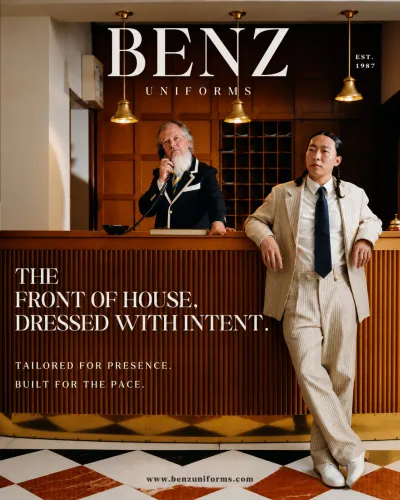
Front office uniforms: These garments usually require a formal appearance. Shirts, trousers, skirts, waistcoats and blazers are common options.
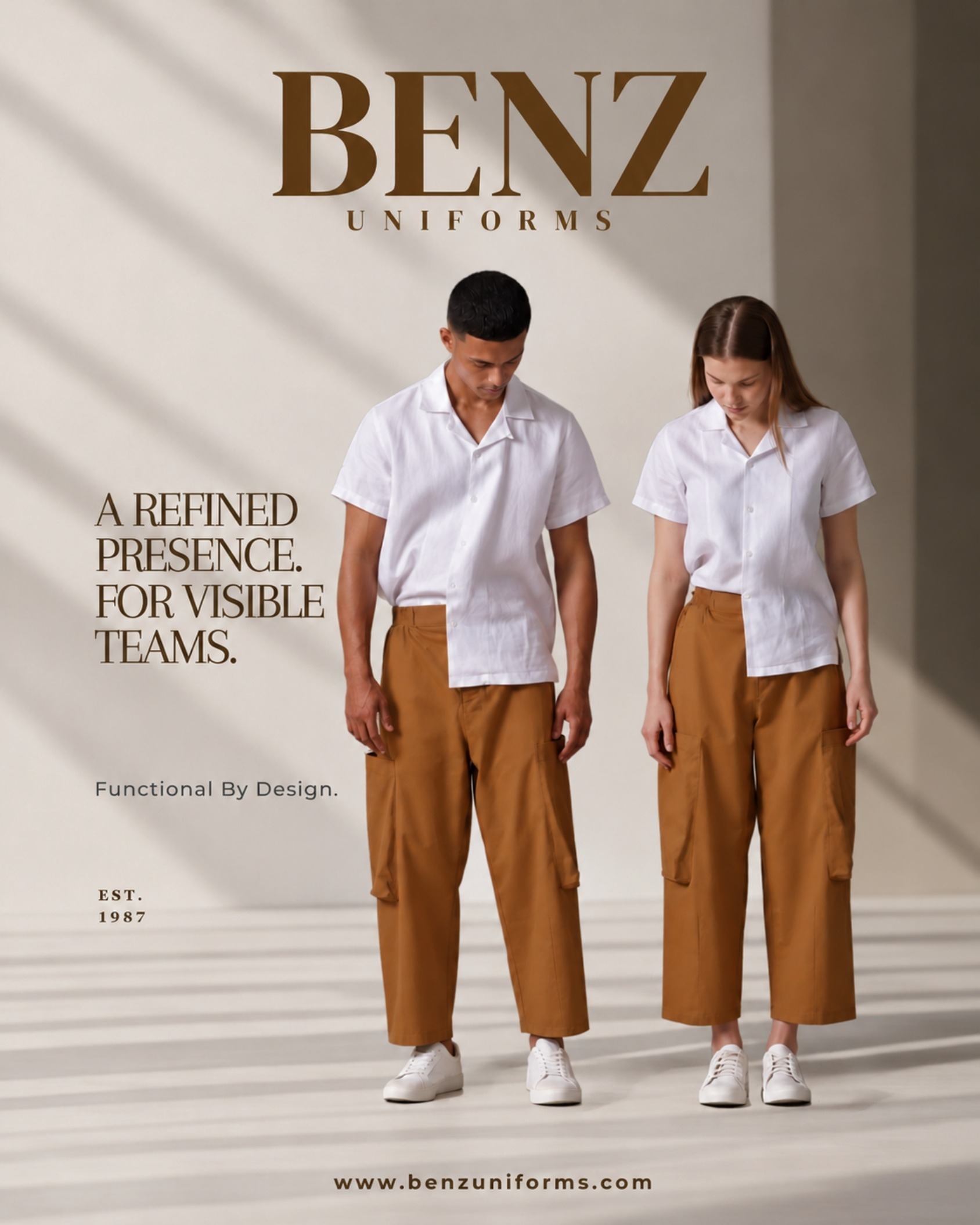
Housekeeping uniforms: These focus on movement, comfort and ease of washing. Tunics, shirts and trousers are frequently considered.
Restaurant uniforms: Shirts, aprons, trousers and waistcoats can be selected according to the restaurant's service style.
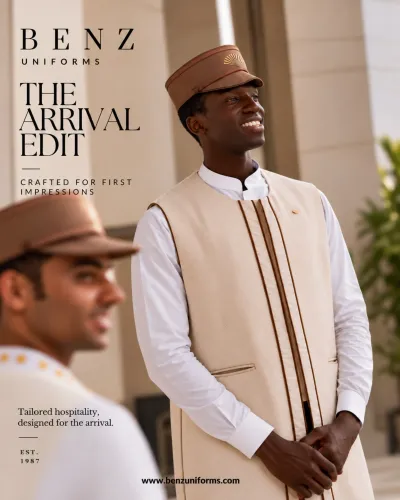
Concierge uniforms: These often include structured jackets, formal shirts and coordinated accessories.
Management uniforms: Management clothing may follow a more formal corporate style.
A good design process considers both the employee's responsibilities and the visual consistency of the property.
Step 3: Fabric Selection and Sampling
Fabric selection is one of the most important manufacturing decisions.
A material that works well for reception staff may not be suitable for housekeeping employees.
The manufacturer should help the hotel assess:
Breathability.
Fabric strength.
Colourfastness.
Shrinkage.
Stretch and flexibility.
Ease of washing.
Resistance to regular wear.
Sample garments are useful because they allow management and employees to evaluate the fabric before bulk production.
Step 4: Measurements and Size Planning
Incorrect measurements can affect the appearance and comfort of an entire uniform collection.
Hotels should arrange a clear measurement process and maintain department-wise size records.
Important measurements may include:
Chest and waist.
Shoulder width.
Sleeve length.
Shirt or tunic length.
Trouser waist and inseam.
Jacket measurements.
Where possible, sample fittings should be completed before the final order is approved.
Step 5: Production and Quality Inspection
Once designs, materials and sizes are approved, production can begin.
Manufacturing quality should be checked at different stages rather than only after garments are completed.
Important inspection points include:
Fabric quality and shade consistency.
Cutting accuracy.
Stitching strength.
Button and zipper attachment.
Embroidery placement.
Measurement accuracy.
Final garment finishing.
A systematic quality process reduces the possibility of inconsistent uniforms reaching employees.
Step 6: Packaging and Delivery Planning
Hotels often require uniforms in different sizes and for multiple departments. Garments should therefore be organised clearly to simplify distribution.
Proper labelling can include department, garment type and size. This makes it easier for hotel administrators to manage inventory.
What Should Hotels in Pune Evaluate?
When comparing manufacturers, hospitality businesses should consider production experience, design capabilities, sample development, order handling and repeat-order consistency.
A supplier should also communicate clearly about production schedules, fabric availability and any limitations affecting the order.
Benz Uniforms can be considered by Pune hospitality businesses exploring customised uniform requirements and coordinated employee apparel.
Building a Consistent Uniform Programme
Uniform manufacturing should be viewed as an ongoing business requirement rather than a one-time purchase. Hotels need replacement garments, new employee sizes and occasional design updates.
A well-organised manufacturing process helps maintain consistency across these requirements. By planning each stage carefully, hotels can develop uniforms that represent their brand while supporting the people responsible for delivering guest services.