
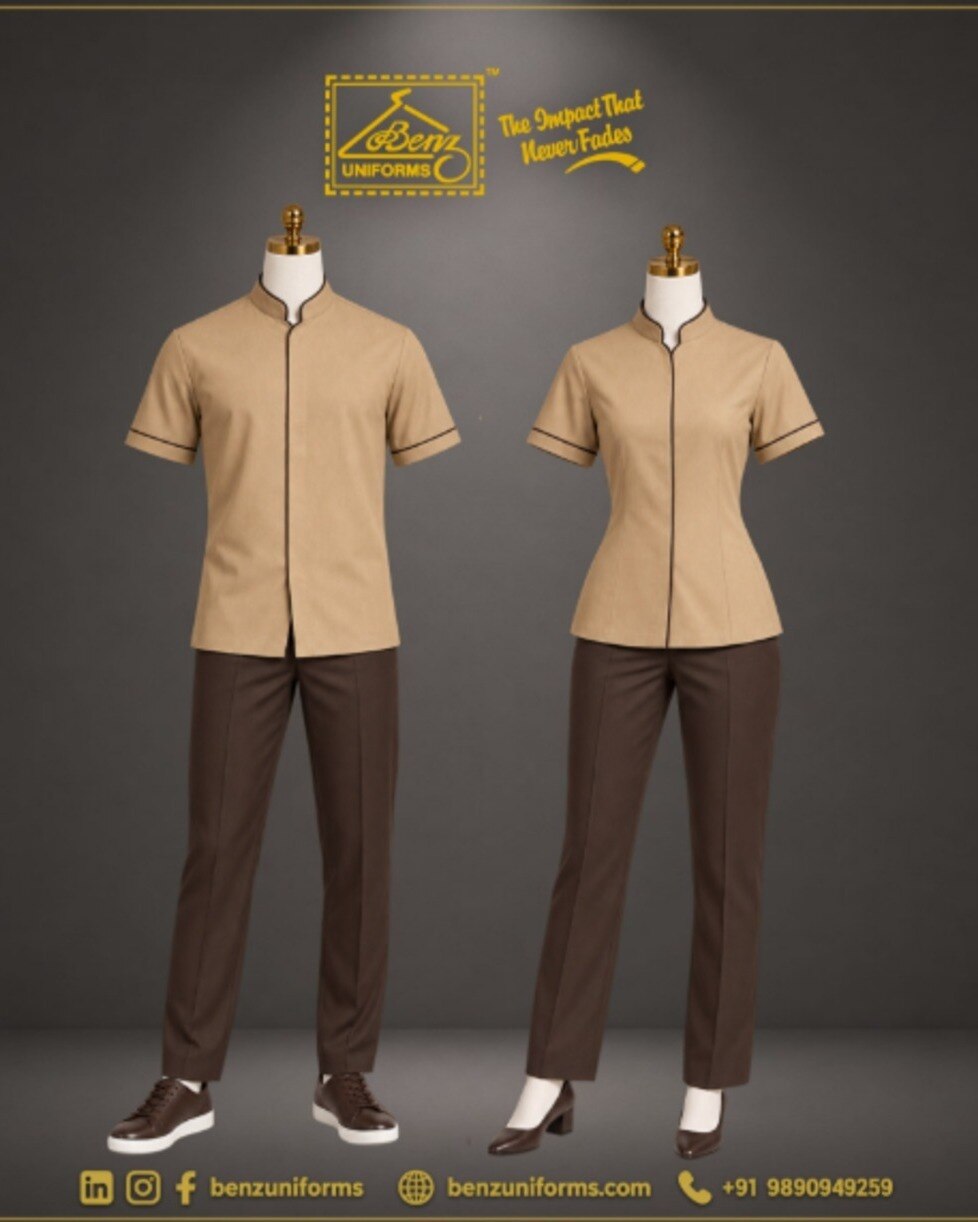
A hotel manager uniform fails when it looks polished on a fitting-room hanger but restricts movement, retains odour, or loses its shape after commercial laundering. Use the specifications below to compare garment systems, approve measurable performance requirements, and give a supplier a brief that produces consistent replacements.
Key takeaways
- Classify every garment as mandatory, optional, seasonal or role-specific.
- Specify fabric performance for walking, sitting, bending and repeated laundering.
- Test manager uniforms during real hotel shifts before approving production.
- Record measurements, laundry limits, replacement parts and acceptance criteria.
Define the uniform system before choosing individual garments
A hotel manager uniform specification must define a coordinated system before anyone selects individual garments. In hotel manager uniform specifications, label each component mandatory, optional, seasonal, or role-specific; otherwise a supplier may replace a structured blazer with a visually similar, less durable jacket.
| Component | Status | Specification |
|---|---|---|
| Jacket or blazer | Mandatory or role-specific | Structured blazer, suit jacket, waistcoat, or approved tunic; state construction |
| Trousers or skirt | Mandatory | Match the jacket or approved separate; specify rise and seated comfort |
| Shirt or knit top | Mandatory | State collar, sleeve, colour, and permitted knit alternative |
| Outer layer | Seasonal | Coat or weatherproof layer matching the hotel palette |
| Name badge and ID provision | Mandatory | Guest-readable badge and secure attachment that does not damage fabric |
| Footwear | Mandatory | Approved colour, grip, comfort, and heel profile |
| Role | Recommended system | Priority |
|---|---|---|
| General manager | Two-piece suit | Refined jacket and low-profile footwear for formal meetings |
| Sales manager | Two-piece suit or light blazer-and-trouser set | Travel-friendly weight and crease recovery |
| Front-office manager | Polished blazer and trousers or skirt | Seated comfort and guest-facing finish |
| Duty manager | Waistcoat with shirt and trousers | Visibility, secure pockets, and seated comfort |
| Food-and-beverage manager | Shirt-and-trouser set | Stain-releasing fabric and stable footwear |
| Housekeeping or operations manager | Tunic-style uniform or washable stretch separates | Reach, mobility, and frequent washing |
A manager uniform for specifications should record these role allocations before sampling. Hot, active shifts favour the shirt-and-trouser set; managers crossing departments need the blazer-and-trouser combination.
Write fabric and performance requirements for real hotel movement
A hotel manager uniform specification must state composition and fabric weight for each garment, not just “formal” or “easy-care.”
| Garment | Composition | Fabric weight | Best use |
|---|---|---|---|
| Blazer | 55% wool, 45% polyester | 240–280 g/m² | Meetings, reception, general management |
| Shirt | 60% cotton, 40% polyester | 110–130 g/m² | Guest-facing daily wear |
| Trousers | 54% polyester, 44% viscose, 2% elastane | 210–240 g/m² | Department movement and stairs |
| Knit top or tunic | 92% polyester, 8% elastane | 180–220 g/m² | Housekeeping and active shifts |
| Outer layer | 100% polyester | 90–120 g/m² | Humid outdoor movement and frequent washing |
Wool-polyester gives a refined drape and better temperature regulation, but polyester can retain heat, shine and odour. Polyester-viscose recovers from creasing and dries quickly; cotton blends feel more natural and breathe better. Stretch fabric supports reaching and stair use, while lightweight synthetics suit humidity and repeated washing.
Require the supplier to state elastane percentage, lining composition and whether interlining survives the intended care process. Test crease resistance, breathability, stain release, abrasion at cuffs and trouser seats, pilling, and colourfastness to laundering, perspiration, wet and dry rubbing, and light exposure.
Inspect armholes, pocket corners, seat seams, hems and buttons on the finished garment. Approve a physical shade standard, define lot variation, and never specify only “navy” or “charcoal.” These controls belong in hospitality manager clothing and hotel manager uniform specifications.
Control the visual details without hiding the manager from guests
Make the manager recognisable through structure, not distance: use a notch-lapel, two-button jacket for a conventional business profile, or an open-collar shirt with a collarless jacket when the role needs less formality. Specify collar stand, roll, button material, buttonhole construction, and secure attachment.
- Set angled, reinforced pocket openings for radio, keys, and phone; add bartacks so the contents do not pull the jacket front.
- Specify a higher trouser rise for seated coverage, with a stated hem allowance for alterations.
- Keep the manager’s colour or trim distinct from front-desk staff while retaining the shared hotel palette. Record the approved physical shade reference, exact piping or embroidery dimensions, thread or transfer method, and wash-durability requirement.
- Measure logo and badge positions from fixed landmarks—such as the shoulder seam, lapel break, and pocket edge—not “left chest.” Provide a readable name badge at guest eye level and an ID attachment that will not damage fabric.
- Inspect the sample for embroidery puckering across the chest or lining, loose buttons, distorted buttonholes, and stressed pocket corners. List spare buttons and replacement trim in the order.
This gives hospitality manager clothing a visible leadership cue without creating an inaccessible executive suit. It also makes the manager uniform for specifications repeatable across sizes and replacement orders.
Approve fit measurements for standing, seated and active work
Request a graded finished-garment size chart from the manager uniform supplier, not S–XL labels. Approve each point of measure against these tolerances: chest, waist and seat ±1 cm; shoulder width, sleeve length, jacket length, trouser rise, inseam and skirt length ±0.5 cm.
| Measurement | Minimum approval detail |
|---|---|
| Chest, waist, seat | Body measurement plus 8–10 cm ease for a shirt; 6–8 cm for a knit top; 10–12 cm when a thermal layer is approved |
| Shoulder and sleeve | Sleeve head sits correctly; sleeve ends at the wrist bone without upper-arm pull |
| Jacket and skirt length | Jacket covers the shirt consistently; skirt remains secure seated and standing |
| Rise and inseam | Waistband stays flat while seated; trouser hem retains enough allowance for alteration |
During fitting, check collar contact, lapel roll, sleeve position, back-armhole ease and jacket-vent behaviour. Have the wearer reach across a desk, climb stairs, lift a light object, enter a vehicle and extend both arms forward. Pockets must stay secure without jacket distortion, and the waistband must not cut in while sitting.
Use separate acceptance profiles: housekeeping needs maximum reach and easy-care mobility; food-and-beverage managers need service movement; front-office managers need stable seated comfort; sales managers need a clean silhouette after travel. Record the approved sample’s key measurements for replacement orders.
Make laundering and replacement part of the original specification
“Machine washable” is not a care specification. A manager uniform supplier must state the tested process and dimensional limits for the complete garment.
| Care item | Demand before approval | Reject if |
|---|---|---|
| Wash and drying | Temperature, cycle, detergent conditions, drying method, tumble-drying limit, ironing temperature, and dry-cleaning requirement | Instructions are incomplete |
| Dimensions | Maximum change for body length, sleeve length, trouser length, and collar dimensions | Any limit is missing |
| Labelling | Care label based on the finished garment and trim combination, using ISO 3758 symbols where applicable | Label covers fabric only |
Run a complete sample through that cycle before bulk production. Inspect collar roll, lapel shape, lining movement, embroidery puckering, trouser crease retention, pocket sag, button security, shade change, finish loss, and post-wash fit.
Set a laundering-life target and define failure for shine, odour retention, distortion, pilling, or colour change. Specify seam type, seam allowance, stitch density, bartacks at pocket openings, reinforced stress points, buttonhole construction, and hem allowance for trouser alterations. Require replacement buttons and confirm availability.
For repeat hotel manager uniform specifications, record the approved fabric, trim, pattern, logo file, physical shade standard, and availability period. This preserves consistency when a fabric mill changes.
Use a supplier brief, sample test and acceptance record
Compare bids against one identical written brief, not against photographs. Your manager uniform for specifications should define garment architecture, role allocation, fibre blend, fabric weight, lining, stretch content, colour reference, construction, measurement tolerances, care process, branding dimensions, replacement terms and approved footwear.
- Ask each manager uniform supplier to separate fabric tests from finished-garment checks. Require evidence for abrasion, pilling, colourfastness and dimensional change, then inspect pocket corners, button attachments, seams, lining and embroidery.
- Approve a complete sample set, not a swatch. Launder and wear the jacket, shirt, trousers, badge and trims together using the stated cycle, then record pass or fail for fit, seated comfort, arm reach, colour, pocket security, collar shape, seam strength and post-wash measurements.
- Keep a sealed reference garment or signed shade standard. Record logo dimensions from fixed landmarks, not “left chest.”
| Check | Require from bidder | Reject when |
|---|---|---|
| Fabric and care | Composition, weight, care cycle and ISO 3758 labelling | Evidence covers cloth only |
| Production control | Pattern adjustments, tolerances and reorder availability | Replacement shade or trim is undefined |
| Safety claims | Hazard-specific standard and conformity documents | ISO 13688 is cited alone |
A supplier discussion with BENZ UNIFORMS should test sample construction, laundering evidence and reorder control.
Related products
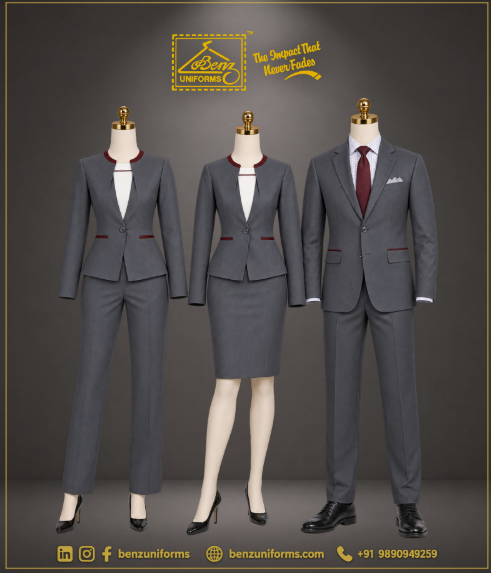 | Manager Uniforms Benz Uniforms: Professional Manager Uniforms for Hotels & Hospitality Leaders Lead with confidence and style. View product → |
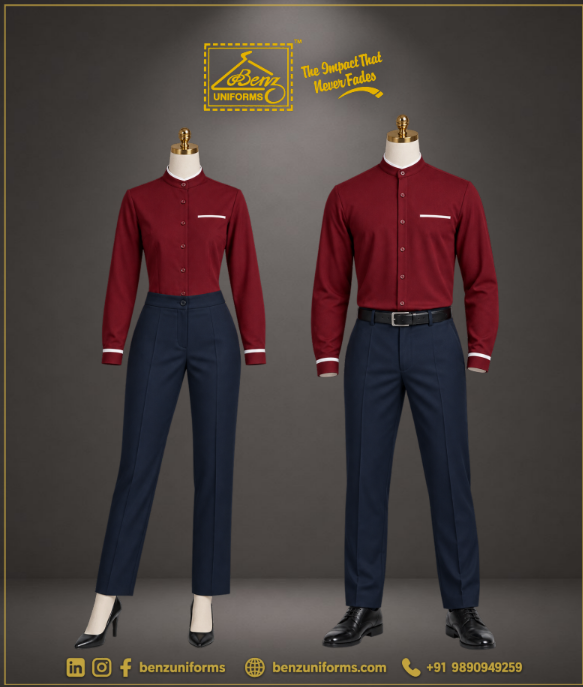 | Restaurant Uniforms Benz Uniforms: Stylish & Comfortable Restaurant Staff Uniforms to Elevate Your Dining Experience Make a lasting impression with our Customized... View product → |
Frequently asked questions
Why define the uniform system before choosing individual garments?
A system prevents suppliers from substituting similar-looking garments and clarifies which components are mandatory, optional, seasonal or role-specific.
What performance requirements should hotel manager uniforms include?
Specify fabric durability, breathability, stretch, wrinkle resistance, colourfastness and performance during walking, sitting, bending and repeated laundering.
How should you test the fit of a manager uniform?
Approve measurements while the wearer stands, sits, reaches, bends and walks, checking jacket balance, sleeve length, trouser comfort and unrestricted movement.
What should a supplier brief and acceptance record contain?
Record garment construction, fabric requirements, measurements, trims, laundry instructions, replacement parts, sample-test results and the conditions for accepting production.