

A Pune kitchen combines seasonal humidity with year-round heat from ranges, ovens, steamers and dishwashing areas. By the end, you will be able to match fabric, coverage, fit, laundering capacity and spare stock to each kitchen zone instead of choosing one heavy coat for every shift.
Key takeaways
- Assess kitchen heat with WBGT, not Pune air temperature alone.
- Use lighter, breathable fabrics in prep zones and stronger protection near fryers.
- Allow spare uniforms for every shift during monsoon laundry delays.
- Test ventilation, movement, laundering and heat protection before approval.
Why Pune kitchen heat is different from outdoor weather
Assess a uniform against the kitchen’s heat load, not Pune’s forecast. Ranges, fryers, ovens, steamers and dishwashing areas create hotter microclimates, while poor extraction or insufficient make-up air traps heat around the worker. Use WBGT, or an equivalent heat-stress assessment, instead of air temperature alone.
A chef uniforms climate in Pune specification should cover the full garment system: coat or shirt, apron, head covering, trousers, socks and footwear. A breathable coat cannot compensate for a non-breathable apron, dark heat-absorbing trousers or poorly ventilated shoes.
| Season | Kitchen conditions | Uniform implication |
|---|---|---|
| Pre-monsoon | Highest outdoor heat and strong radiant load near equipment | Use lighter breathable layers with back, underarm or side ventilation |
| June–September | High humidity, sweating and slow drying | Increase spare stock; prevent damp garments returning to service |
| Winter mornings | Cooler, drier starts before the kitchen heats up | Use layering or seasonal issue quantities, not one heavy coat year-round |
Hotel staff uniforms chef for teams weather in Pune planning must also retain protection. Removing front fabric to improve airflow exposes the torso to hot oil, steam and spills; place ventilation away from the protective front and retain apron coverage.
Specify clean replacements for every shift when coats or aprons are visibly soiled. Open-flame or high-radiant-heat stations need a separate risk review: a thick cotton or polyester chef coat is not certified heat- or flame-protective clothing unless it carries the required standard.
Choosing fabric weight and construction for each kitchen zone
A 150–190 g/m² coat or shirt suits the hot line better than a heavyweight all-season jacket. Choose a cotton-rich poplin or twill front for heat and splash resistance, with mesh or eyelet panels at the back and underarms. Use white or pale colours to expose oil and food soil; dark fabric absorbs more radiant heat.
| Zone | Fabric and weave | Colour and garment weight |
|---|---|---|
| Hot line | Cotton-rich, tightly woven twill or poplin; ventilation panels away from the front | White or pale; 150–190 g/m² |
| Bakery | Cotton-rich twill with a smooth, close weave that resists flour holding in the surface | White or cream; 180–220 g/m² |
| Garde manger | Lightweight cotton-polyester poplin or ripstop that dries faster than pure cotton | Light colour; 140–180 g/m² |
| Dishwash | Quick-drying polyester-cotton blend with a tightly woven, splash-shedding surface | Medium or light colour; 160–210 g/m² |
| Banquet production | Breathable cotton-polyester poplin for repeated movement and fast turnaround | Light colour; 140–180 g/m² |
| Cold storage | Midweight cotton-rich twill, worn over a breathable base layer | White or pale; 200–240 g/m² |
| Outdoor catering | Durable cotton-polyester twill with ventilation and a removable splash apron | Light or medium colour; 170–220 g/m² |
These figures describe the garment fabric, not the complete system. A breathable coat fails if a plastic apron traps heat or dark trousers retain radiant warmth. Specify laundering performance too: repeated hot washing, pressing and tumble drying expose shrinkage and seam distortion.
For hotel kitchen uniforms in Pune, compare drying time as well as fibre content. Chef workwear for weather in Pune needs seasonal issue quantities or layering, not one heavy coat for every month.
Balancing protection, ventilation and movement
A practical Pune compromise is a breathable coat or shirt with ventilation at the back, underarms or side panels, while the front remains covered against oil, steam and spills. For hotel staff clothing in a kitchen, removing front fabric to increase airflow creates a larger burn and contamination risk.
Specify these details:
- Sleeves: Use close-fitting long sleeves near fryers, ranges and steamers. Choose a shape that bends at the elbow without pulling across the upper arm.
- Collars: Select a low-profile, secure collar that shields the neck from splashes without pressing against sweaty skin. Avoid loose fabric that can catch on handles.
- Cuffs: Use snug cuffs with enough forearm room for movement. Avoid wide openings that dip into food or trap hot liquid against the wrist.
- Closures: Choose concealed buttons, snaps or a secure fastening system with no dangling ties or exposed decorative hardware. A loose closure can snag rotating equipment.
- Aprons: Extend protection across the chest and below the knees where splash and soil are likely. Use breathable material and adjustable straps that do not tighten across the neck.
- Fit: Leave room for bending, reaching and layering, but remove excess fabric at the waist, sleeves and shoulders. An oversized coat catches on corners; a tight one restricts escape movements.
Pair the top with breathable trousers, a head covering and ventilated, slip-resistant footwear. Keep clean replacements available each shift so sweat-soaked or visibly soiled clothing does not return to service. Near open flame or flash-fire hazards, assess certified protective clothing separately; a thick chef coat is not certified PPE.
Keeping uniforms clean, dry and available during monsoon
Do not return a coat or apron to service because it feels dry. Oil can remain in the weave, turmeric can transfer to food-contact areas, and damp fabric can develop odour inside a closed laundry bag. Treat hotel staff clothing kitchen teams can replace as a hygiene-and-stock system, not a single garment purchase.
1. Separate used uniforms at the kitchen exit. Use ventilated, labelled bins for soiled clothing and a different covered rack or cupboard for laundered stock; never place wet garments on clean uniforms.
2. Pre-treat oil spots before washing with a washable, colour-safe degreaser. Treat turmeric marks promptly, following the garment-care label, and reject any coat or apron that still shows food soil after laundering.
3. Wash coats, aprons, trousers and head coverings at the temperature and chemical concentration specified by the fabric and detergent supplier. Do not mix heavily greasy loads with lightly soiled items, and record failed washes for reprocessing.
4. Dry every item completely in a clean, ventilated drying room or dryer. A damp monsoon garment that smells must not be “aired” on a staff changing-room hook and issued again.
5. Keep at least three complete sets per employee: one in use, one in laundry and one ready. Add sets when washing and drying take longer than one shift, or when double shifts increase turnover.
BENZ UNIFORMS can help compare washable colours, lighter quick-drying blends and the complete stock requirement rather than approving fabric weight alone. Polyester-rich cloth dries faster, but test odour retention and heat exposure before choosing it for Pune’s kitchen zones.
Related product
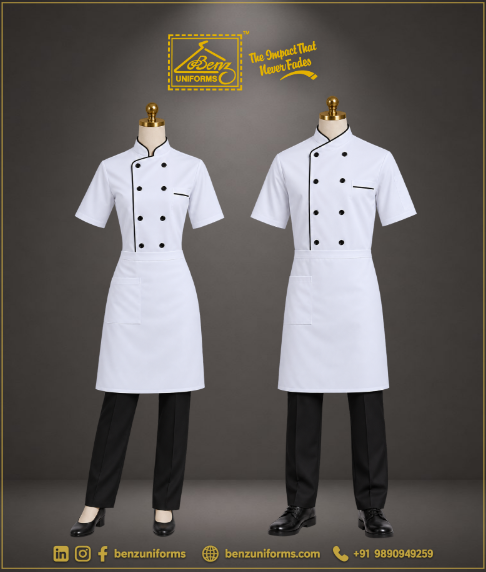 | Chef Uniforms Benz Uniforms: Elevate Your Kitchen with Professional Chef Uniforms At Benz Uniforms, we understand that a chef's attire is more than just... View product → |
Testing the complete uniform system before approval
Approve the complete set only after staff wear the coat, apron, trousers, head covering, footwear and protective equipment through a busy service. For chef workwear for weather in Pune, test the whole system, not the coat’s fabric specification alone.
1. Run the trial at the hot line, fryer, oven, steamer and dishwash area during the hottest pre-monsoon shift. Record WBGT or another heat-stress measurement, plus staff reports of dizziness, restricted movement, soaked clothing and trapped heat.
2. Check protection during actual tasks. The apron must cover the areas exposed to oil and steam; closures must stay secure; sleeves and cuffs must not catch handles or enter food.
3. Inspect food-safety performance after service. Replace any coat, apron or head covering that is visibly soiled, wet or odorous, and confirm enough clean sets exist for every shift rather than relying on reuse.
4. Test footwear on wet and greasy floors. Reject pairs that slip, absorb water, pinch during crouching or lack a secure heel; verify that socks remain dry enough for the full shift.
5. Repeat the trial during humid monsoon conditions and on cooler winter mornings. A chef uniforms climate in Pune assessment fails if one heavyweight set works only in one season.
6. Where open flame, high radiant heat or flash-fire exposure exists, obtain the applicable certified protective clothing standard and test documented PPE against it. Do not call an ordinary chef coat protective equipment because it is thick.
Record failures by kitchen zone, worker role and season, then approve only the version that passes every check.
Frequently asked questions
Why does Pune kitchen heat differ from outdoor weather?
Ranges, fryers, ovens, steamers and dishwashing areas create hotter microclimates than outdoor conditions. Poor extraction and low make-up air trap heat around staff, so assess heat load with WBGT or an equivalent method.
How should fabric weight vary across kitchen zones?
Use lighter, breathable construction in cooler preparation areas, then prioritise tighter, more protective fabrics near fryers, ovens and steam equipment. Match the uniform to splash, flame and movement risks.
How can hotels balance protection, ventilation and movement?
Choose garments that cover exposed skin without restricting reaching, bending or lifting. Combine breathable panels or construction with secure fastenings and protection suited to each task.
How many uniforms should staff have during Pune monsoon?
Plan enough clean spare sets to cover longer drying times, heavy perspiration and unexpected laundry delays. Test the laundering process before setting the final issue quantity.