
Finding the best hotel uniform supplier in Bangalore should involve more than requesting three quotations and selecting the lowest price. Uniforms are used every day, washed repeatedly, and seen by guests across almost every area of a hotel.
Procurement teams in Bangalore, Karnataka should therefore evaluate suppliers on product consistency, fabric suitability, sizing support, design capability, production planning, and replacement service.
A structured checklist can make supplier comparison easier.
1. Does the Supplier Understand Hospitality Roles?
A hotel uniform supplier should understand that front office, housekeeping, kitchen, restaurant, concierge, and maintenance teams have different requirements.
Ask how the supplier would adapt fabric, fit, styling, and garment construction across departments.
2. Are Fabric Specifications Clearly Explained?
Avoid approving fabric based only on appearance.
Request information about:
- Fabric composition
- Weight
- Shrinkage
- Colour retention
- Wrinkle behaviour
- Recommended washing method
- Expected usage conditions
Hotels should understand what they are buying before approving bulk production.
3. Is Sampling Available?
Samples allow teams to evaluate fit, stitching, colour, comfort, and garment construction.
They also allow staff members to test how uniforms feel during movement.
For larger hotels, a pilot fitting with employees from different departments can identify sizing issues early.
4. Can the Supplier Maintain Consistency?
Hotels regularly need replacement uniforms.
Ask how fabric shades, embroidery files, patterns, sizes, trims, and accessories will be recorded for future orders.
Repeat-order consistency is particularly important for properties with a large workforce.
5. Can Designs Be Customised?
Premium hotels may need uniforms that reflect architecture, interior colours, brand identity, or departmental hierarchy.
The supplier should ideally be able to modify collars, sleeves, trims, pockets, jackets, accessories, and other elements rather than offering only catalogue products.
6. Is Bulk Sizing Managed Properly?
Hotels may have employees across a wide size range.
Procurement teams should review the supplier’s size chart and determine whether special sizes can be produced when required.
A measurement and fitting system can significantly reduce alteration problems.
7. Are Delivery Requirements Realistic?
Large orders require planning.
Hotels should communicate joining dates, opening schedules, renovation timelines, and departmental priorities clearly.
Suppliers should also provide realistic production schedules based on design complexity and order quantity.
8. Is the Uniform Easy to Maintain?
A visually impressive garment that requires complicated care may create problems for the laundry team.
Hotels should evaluate ironing requirements, washability, stain handling, and garment durability.
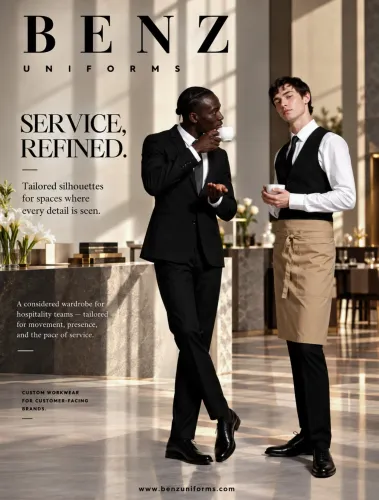
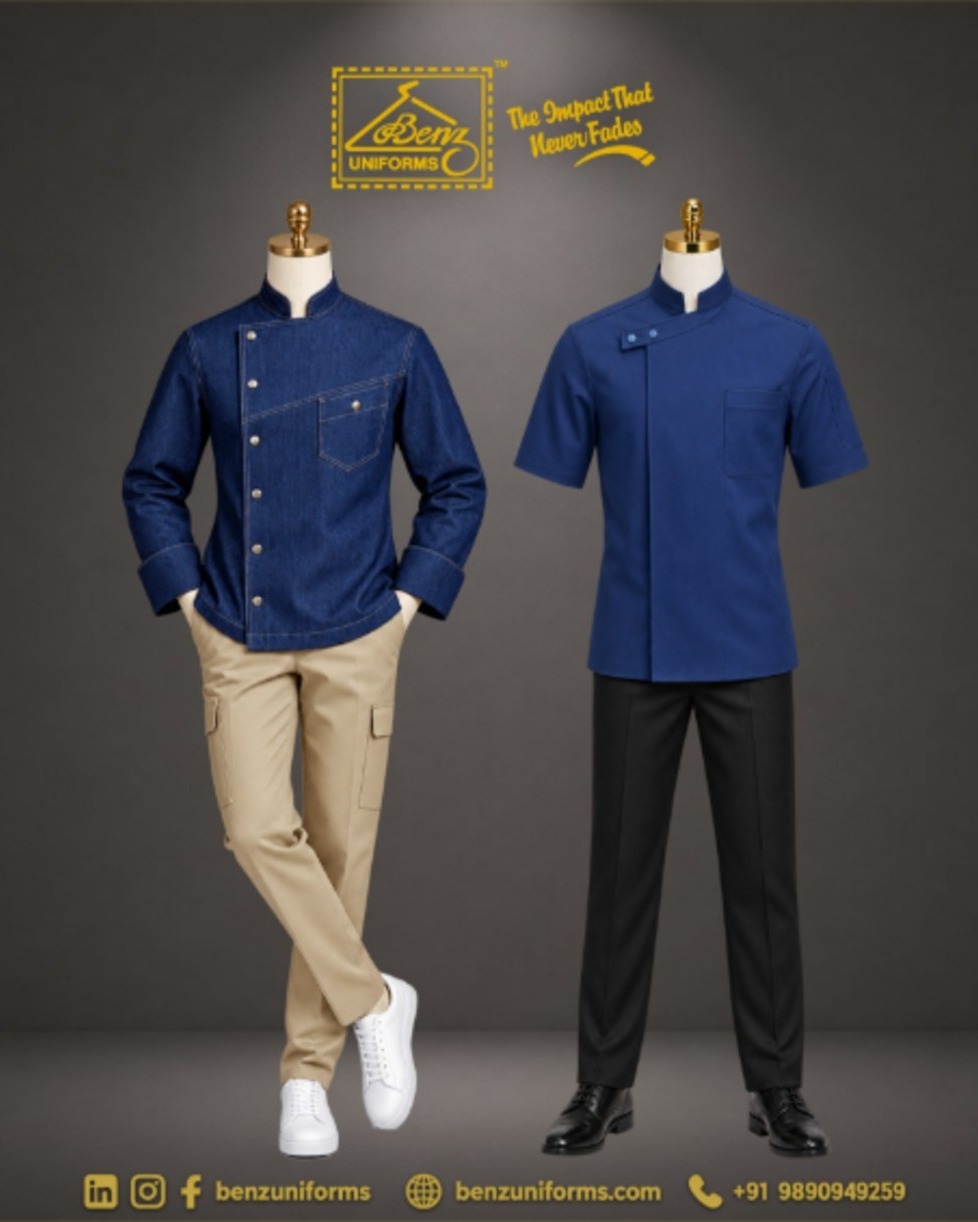
For procurement teams comparing hotel uniform suppliers in Bangalore, BENZ UNIFORMS can be evaluated for hospitality uniform planning, customised designs, role-specific garments, sizing, and production requirements.
The best supplier is usually the one that understands how hotel uniforms function operationally and can maintain quality and consistency beyond the first delivery.