
A restaurant uniform order involves far more than choosing shirts and adding a logo. You need a supplier that can translate each role, work environment, laundry process and replacement need into specifications you can approve, test and reorder consistently.
Key takeaways
- Document each role, work area, wash process and replacement requirement.
- Specify fabric, colour and branding with measurable acceptance checks.
- Give suppliers staff numbers, garment use and laundry conditions.
- Set replenishment rules and inspect samples before approving production.
The service begins with specifications, not finished garments
Before cutting cloth, a hospitality uniform manufacturer turns your operation into a documented specification: who wears each garment, where they work, how it will be washed and how replacements will match.
1. Consultation maps headcount, roles, outlets, shift patterns and size distribution. The supplier compares stock garments, made-to-measure fits and fully custom production: stock speeds replenishment but limits fabric, fit, trims and branding; custom work gives greater control but requires minimum quantities, sampling and longer repeat-order planning.
2. Fabric selection records composition, weight, finish, colourfastness, shrinkage tolerance, care method, permitted wash temperature, closure type, seam construction and pocket dimensions. “Premium” and “easy-care” mean nothing until converted into measurable requirements. The supplier develops graded patterns, a size set and artwork for embroidery, heat transfer or printing.
3. Sample development tests fit on representative staff, not nominal size labels. Check the collar, opacity, pocket position, sleeve movement, closures, labels and branding scale before approving a sample.
Record the approval against physical colour swatches, measurement charts and care labels, then plan production with inspection criteria for measurements, stitching, seam strength, colour consistency and decoration alignment.
4. Retain approved patterns, embroidery files, colour standards, replacement components and outlet-specific order records. A restaurant staff uniform supplier should deliver a repeatable system covering production, quality checks, delivery and reorders, including minimum quantities and isolated-garment replacement. That record prevents a damaged shirt or apron from returning in a different colour, fit or trim.
Each restaurant role needs its own garment specification
A single shirt or jacket pattern cannot serve a restaurant team: a chef needs heat protection, while a host needs a polished silhouette and unrestricted movement. Specify each role around heat, spills, movement, storage, washing and Bengaluru’s warm climate.
| Role | Garment specification | Practical reason |
|---|---|---|
| Chefs and cooks | Heat-tolerant chef coats, secure closures, sleeve options, low or internal pockets and caps | Reduces snagging and contamination risks near heat; use hair restraints where exposed food or clean equipment could be contaminated |
| Kitchen porters | Hard-wearing washable tunics or shirts, durable trousers, aprons and slip-resistant footwear | Handles wet, greasy work and frequent washing without impractical formalwear |
| Servers and bartenders | Lightweight shirts or tunics, mobile trousers or skirts, defined apron dimensions, secure tool storage and stain-manageable fabrics | Supports bending, outdoor service and spills; waistcoats suit air-conditioned dining rooms only when they do not restrict movement |
| Hosts and cashiers | Polished shirts, tunics or waistcoats, comfortable trousers or skirts, discreet name badges and practical footwear | Preserves front-of-house appearance without slowing movement |
| Supervisors and managers | Distinctive colour, piping, waistcoat or badge over washable shirts and trousers | Signals authority without hot, restrictive formalwear |
| Hotel restaurant teams | Coordinated shirts, aprons, badges and colours with housekeeping and adjacent departments | Keeps hotel dining uniforms recognisable while maintaining department-specific functions |
Across hospitality restaurant uniforms, choose secure fastenings and minimal dangling accessories. Test restaurant uniforms in Bengaluru through a normal shift, stains, heat, washing, drying and storage; assess hotel dining uniforms against the same cycle before rollout.
Turn fabric, colour and branding claims into testable requirements
Specify each fabric and decoration with a measurable test, not labels such as “premium,” “breathable” or “easy-care.” A hospitality uniform manufacturer should record:
- Fibre composition, fabric weight and finish
- Breathability, drying time and abrasion resistance
- Stain visibility and colourfastness expectation
- Shrinkage tolerance and permitted wash temperature
- Seam construction, closure type and pocket dimensions
Agree the laundering route before approving fabric. Industrial laundry, commercial wash-and-fold and in-house washing can produce different dimensional change, shade loss, seam damage and drying times.
| Laundry route | Main risk to compare | Evidence to request |
|---|---|---|
| Industrial laundry | Heat, chemicals and mechanical action | ISO 15797 assessment results |
| Commercial wash-and-fold | Variable cycles and handling | Trial-wash measurements and shade check |
| In-house washing | Household equipment and drying limits | Tested care method and drying time |
ISO 15797 helps assess workwear intended for industrial laundering; it is not a complete uniform specification. Test the actual garment and care process.
Approve physical textile swatches, not screen images. Polyester, cotton blends, embroidery thread and apron fabric can show the same nominal colour differently. Record the approved brand-colour reference, logo position, embroidery or heat-transfer method, thread or ink colour and name-badge position.
Require a pre-production or sealed approval sample, then wash it before sign-off. Check collar roll, opacity, pocket position, embroidery scale, sleeve mobility and trouser rise. A digital mock-up cannot answer those questions for hospitality restaurant uniforms.
Give the supplier enough operating data to build the right order
Send a specification pack, not a catalogue screenshot. The supplier needs operating facts that determine quantities, fit, construction and delivery risk.
1. Provide headcount by role, size distribution, representative staff measurements, shift pattern, work locations and role changes between shifts. State garments needed per employee, spare-stock levels, expected replacement rate and delivery deadline.
2. Record the laundry method: in-house washing, commercial wash-and-fold or industrial laundry. Add approved artwork files, brand-colour references and physical colour swatches, then state restrictions on pockets, fasteners, sleeve length, footwear, dangling accessories and hair restraints.
3. Use a documented fit protocol with representative staff members from each role. Numeric sizes vary between brands and patterns, so check the manufacturer’s measurement chart, try-on samples and movement before approving production. A restaurant staff uniform supplier should retain the approved size set and outlet-specific measurements.
4. Run a pilot through a normal shift before ordering the full quantity. Test heat exposure, bending, reaching, food and beverage stains, washing, drying and storage; record discomfort, stain release, shrinkage, colour change, pocket access and fastening failures. Approve a sealed sample only after reviewing that evidence.
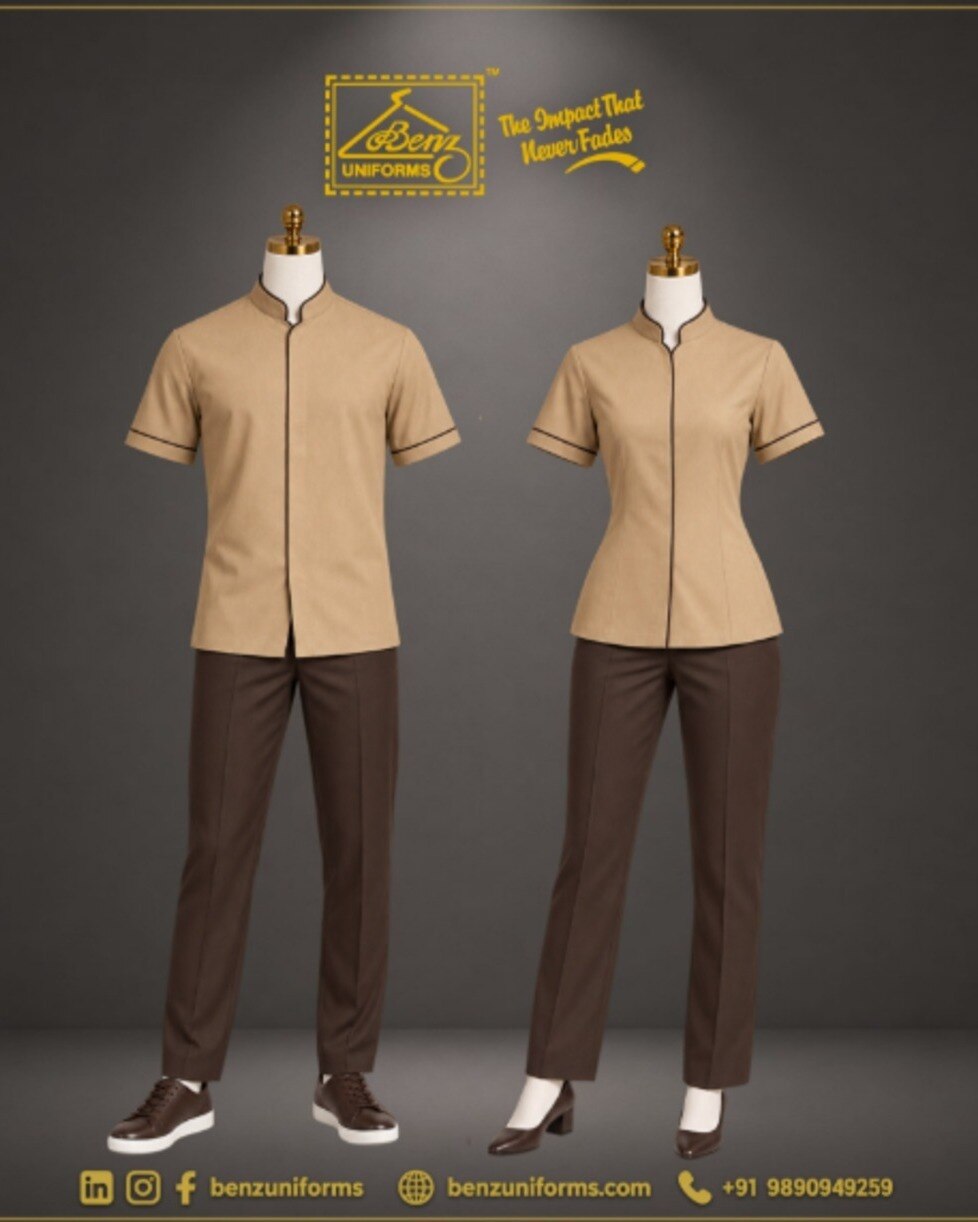
A Bengaluru restaurant comparing restaurant uniforms in Bengaluru can use BENZ UNIFORMS as one example of a manufacturer to approach for consultation through production. Keep the decision tied to documented specifications, approved samples and pilot results, not a catalogue image.
Build replenishment and quality control into the original purchase
The cheapest delivered garment can become the costliest choice after fitting, washing and replacement. Compare each restaurant staff uniform supplier on the operating costs and risks that begin after delivery, not on unit price alone.
| Option | Purchase and approval | After-delivery trade-off |
|---|---|---|
| Stock garment | Lowest price and fastest approval | Limited colours, branding and fit; faster replenishment |
| Custom production | Higher price, samples and minimum quantities | Better role fit and visual control; longer approval and repeat-order lead times |
| Made-to-measure | Highest fitting effort | Precise fit, but alterations and individual replacements are harder to standardise |
Request a written inspection checklist covering:
- Stitching, seam strength, colour consistency, embroidery alignment, garment measurements, closures, labels and finish
- Minimum order quantities, repeat-order lead times, retained patterns, available sizes and replacement buttons, thread and fabric
- The process for replacing one damaged shirt, apron or trouser while preserving colour, logo position, measurements and trim
Standardise common buttons, thread colours, trouser fabrics and embroidery files across front-of-house, back-of-house and supervisory teams. Keep role-specific features different, such as apron length, chef-coat weight, pocket layout and sleeve type.
Compare total ownership using purchase price, fitting time, laundry performance, drying time, alteration needs, replacement frequency and stock held for new starters. A stock garment suits stable, urgent requirements; custom production earns its longer cycle when several outlets need consistent hotel dining uniforms, specialised fit or controlled branding.
This turns replenishment into a documented system rather than a fresh design decision.
Frequently asked questions
What does a hospitality uniform manufacturer provide before making garments?
The manufacturer turns your operation into a documented specification covering roles, work areas, washing methods, garment details and replacement requirements.
Why does each restaurant role need a separate garment specification?
Kitchen, dining, bar, housekeeping and supervisory roles face different movement, heat, stain and branding demands, so one garment specification rarely suits every team member.
How can you make fabric, colour and branding claims testable?
Define measurable requirements such as fabric composition, colour reference, size range, logo placement, embroidery dimensions, wash temperature and colourfastness checks.
What operating information should you give a restaurant staff uniform supplier?
Provide headcount by role, shift patterns, work locations, climate exposure, food and liquid risks, laundry process, order quantities and expected replacement timing.
How should you plan uniform replenishment and quality control?
Approve a production sample, record garment measurements and branding placement, retain colour and fabric references, and set a repeat-order process with inspection checks.