
Oil, curry, coffee, wine, milk and bleach do not behave alike, so one “stain-resistant” fabric cannot solve every restaurant uniform stain problem. You will be able to match fabric, colour, garment construction and laundering controls to each restaurant role, then test whether the uniform survives real hotel service.
Key takeaways
- Map stains by role before choosing restaurant uniforms.
- Choose darker colours and easy-care fabrics for high-contact zones.
- Blot and pretreat stains before heat sets them permanently.
- Pilot uniforms through real shifts before placing a larger order.
Which stains affect each restaurant role most?
A chef’s jacket faces oil, butter, meat protein, tomato sauce, curry, turmeric and food dyes; a host’s shirt faces a different, lighter soil load. These restaurant uniform stain problems become easier to manage when you map each role’s contact points instead of buying one “stain-resistant” fabric for everyone.
| Role | Main soils to expect | Where marks appear |
|---|---|---|
| Chef | Cooking oil, butter, grease, protein, tomato, curry, turmeric and food dyes | Chest, abdomen, sleeves and apron front |
| Server | Sauces, oil, coffee, wine, milk, perspiration and food pigment | Cuffs, front placket, waist and apron |
| Bartender | Beer, wine tannins, spirits, syrups, citrus juice, coffee and food dyes | Cuffs, pockets, waist and lower front |
| Host | Perspiration, makeup, dust, coffee and occasional food or wine splashes | Collar, underarms, cuffs and front |
| Banquet staff | Wine, coffee, sauces, grease, milk and coloured desserts | Sleeves, cuffs, waist and apron front |
| Room-service staff | Soup, oil, sauces, coffee, milk, gravy and tray spills | Front, cuffs, pockets and trouser thighs |
| Restaurant manager | Perspiration, collar oil, coffee, ink, food splashes and bleach from spot cleaning | Collar, cuffs, pockets and jacket front |
For hotel restaurant uniforms, pale garments expose soil early and support visual quality checks, while dark garments hide food marks but reveal grease as shiny patches. Treat chlorine bleach splashes separately: they remove dye rather than soil, leaving permanent pale spots. Delayed spills, especially oil, can yellow after repeated laundering.
How should you compare fabrics and colours for stain-prone teams?
A 65/35 polyester-cotton blend is the safest starting point, but it is not the universal optimum. Compare it with the team’s heat, comfort and replacement demands before choosing a colour or finish.
| Option | Stain visibility and colour | Comfort and drying | Durability and washing | Best fit |
|---|---|---|---|---|
| 65/35 polyester-cotton, mid-tone | Hides light marks without masking grease indefinitely | Breathes better than polyester and dries at a practical speed | Resists creasing and repeated commercial washing | Servers, hosts and managers |
| 100% polyester, dark or patterned | Conceals food colour but exposes oily shine and water spots | Dries fastest but feels warmer during active service | Strong colour retention and high abrasion resistance | Banquets, room service and high-change teams |
| Cotton-rich blend, white or pale | Shows soil immediately, supporting visual quality control | Coolest against the skin but dries slowly | Needs careful drying and can shrink or crease | Chefs and roles with controlled laundering |
A durable soil-release finish can help cooking oil lift during washing; it will not stop tomato, coffee, wine, turmeric or food dye from colouring the cloth. Treat the finish as an aid, not permission to delay stain treatment.
For the phrase hotel staff uniforms restaurant for staining problems, the practical choice is usually a mid-tone 65/35 garment with a tested soil-release finish. Dark navy hides many marks but turns grease into shiny patches, while white permits compatible bleaching and exposes restaurant workwear issues early.
Check the care label for wash temperature, bleach status, drying method and ironing temperature. Test samples through actual commercial cycles: record dimensional change, collar and cuff wear, drying time and stain removal after repeated washes.
What should staff do when a uniform is stained?
Treat a fresh mark before it reaches the dryer. Scrape off solids with a blunt edge, then blot liquid from the outside toward the centre with a clean cloth. Rubbing spreads pigment and drives oil into the fibres.
1. Identify the soil before choosing a product. For oil, butter or grease, lift excess with an absorbent towel and apply liquid laundry detergent to the mark. For milk, egg or other protein, flush with cool water; hot water cooks the protein into the fabric. For coffee or wine, blot and rinse with cool water.
Tomato, curry and food dyes need detergent, followed by oxygen bleach only when the care label permits it.
2. Read the care label before laundering. Check the permitted wash temperature, bleach status, drying method, ironing temperature and whether the garment requires commercial or industrial laundering. Never apply chlorine bleach to a coloured uniform unless the label expressly allows it; a splash can cause permanent colour loss.
3. Wash promptly in an uncrowded machine using the specified detergent and temperature. Overloading leaves oil behind, while too little detergent reduces soil removal. Inspect the stain while the garment is wet, and repeat treatment before drying if any shadow remains.
4. Keep heat away until the mark disappears. Use the label-approved air-dry or low-temperature setting, then send persistent restaurant uniform stain problems to a commercial laundry with the garment’s care instructions. Record the result as part of hotel staff uniform care.
Which construction details prevent recurring restaurant workwear issues?
Most recurring restaurant workwear issues begin at the edges, not the body fabric. Specify construction that keeps food out, exposes dirty zones for replacement and lets staff move without overheating.
| Component | Recommended construction | Problem prevented |
|---|---|---|
| Collars and cuffs | Low-profile collars, dark contrast undersides and replaceable cuff panels | Perspiration, makeup and grease rings becoming permanent |
| Aprons | Wide coverage, adjustable ties or cross-back straps, washable fabric and a clean overlap at the waist | Sauce and oil reaching the shirt or collecting where apron meets garment |
| Pockets | Slanted, shallow openings with closed bottoms and reinforced corners | Crumbs, cutlery and liquid sitting inside or pulling seams open |
| Sleeves and fasteners | Elbow room, secure cuffs, reinforced sleeve seams and concealed snaps or a durable front zip | Splash exposure, snagging and food trapped around buttons |
| Ventilation and stretch | Underarm or upper-back vents, plus stretch side panels or gussets outside splash zones | Sweat saturation, restricted reaching and seam failure |
For chefs, choose sleeves that cover the forearm without loose fabric near heat or equipment. Do not call an ordinary jacket heat- or flame-protective unless it meets the specified protective-clothing standard.
Use darker panels at pocket openings, collar edges and apron-contact areas rather than making every garment dark. Hotel restaurant uniforms last longer when high-wear pieces are replaceable, seams are reinforced and stretch fabric stays away from the dirtiest contact points.
How can you prove a uniform works before placing a larger order?
Use a controlled wear-and-launder trial, not a fitting day. For hotel staff uniforms restaurant for staining problems, issue samples to chefs, servers and other high-risk roles, then record what actually happens in service.
1. Record each spill by type: oil, tomato, curry, coffee, wine, milk, perspiration or bleach. Note the garment panel affected, time before treatment and whether the mark remained after washing.
2. Run the samples through the hotel’s real laundry process. Document detergent, wash temperature, bleach or oxygen-bleach use, drying method and cycle count. Follow the hotel staff uniform care label; household stain removers and high heat can create failures the garment did not cause.
3. Inspect after every defined group of cycles. Compare collar and cuff colour, pilling, seam condition, logo damage, fastener security and fabric feel against an unworn sample.
4. Measure dimensional change at the chest, sleeve, body length and waist. A shirt that shrinks into a poor fit will be rejected even if it releases grease effectively.
5. Score stain removal under consistent lighting, using the same scale for each fabric and colour. Test whether a 65/35 polyester-cotton blend suits your process rather than assuming it is the universal answer.
BENZ UNIFORMS adds value by converting these results into role-specific fabric, colour, construction and sizing decisions, then producing samples for another controlled check. Ask the supplier to review your laundry chemistry and cycle data, not just present a laboratory “stain-resistant” claim.
Related product
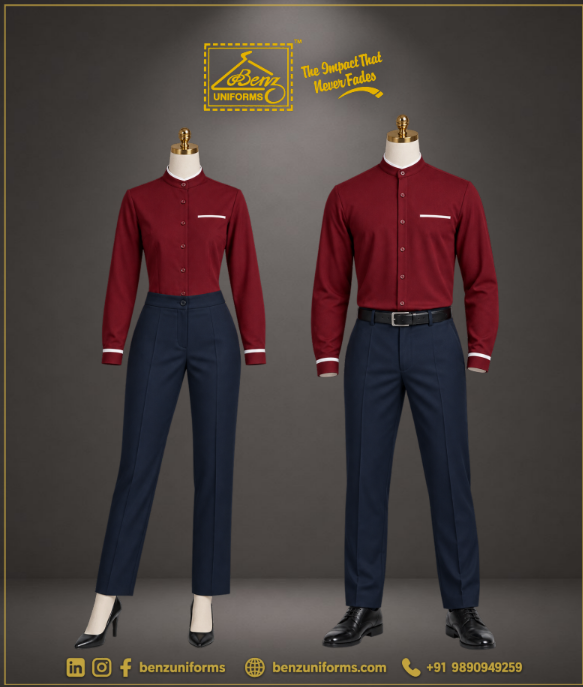 | Restaurant Uniforms Benz Uniforms: Stylish & Comfortable Restaurant Staff Uniforms to Elevate Your Dining Experience Make a lasting impression with our Customized... View product → |
Frequently asked questions
Which stains affect each restaurant role most?
Chefs face oil, butter, meat protein, tomato sauce, curry, turmeric and food dyes. Servers and hosts face beverage, sauce, grease and cosmetic transfer around the front of house.
How should you compare fabrics and colours for stain-prone teams?
Compare fibre content, weave, laundering instructions, drying time, colourfastness and visible soil. Use role-specific colours rather than one shade for every department.
What should staff do when a uniform is stained?
Remove food solids, blot liquid, flush the mark from the reverse side and pretreat it before washing. Avoid tumble-drying or ironing until the stain has disappeared.
How can you prove a uniform works before placing a larger order?
Run a pilot with staff from each role through real shifts and planned wash cycles. Record stains, comfort, colour change, shrinkage, drying time and repair needs before scaling the order.