
Bellboys in Hyderabad work through two different heat burdens: intense pre-monsoon temperatures that can reach or exceed 40°C, and monsoon humidity that prevents sweat from evaporating quickly. A useful uniform brief must account for movement between air-conditioned interiors and exposed driveways, then test garments through real luggage-handling tasks, laundering and peak arrival periods.
Key takeaways
- Use breathable, quick-drying fabrics for outdoor bell and luggage duties.
- Choose lighter colours and a relaxed fit to reduce visible heat stress.
- Test uniforms beside vehicles, at trolleys and during door-opening tasks.
- Specify replacement quantities around washing, monsoon humidity and daily service wear.
Why Hyderabad heat is harder on bellboy uniforms than desk uniforms
At 40°C or above, Hyderabad heat turns a bellboy uniform into working equipment, not just formal clothing. Intense sun heats staff standing beside vehicles, while opening doors, carrying luggage and pushing trolleys add constant movement. A desk uniform designed for cool indoor standing can quickly feel restrictive, damp and untidy during porte-cochère duty.
Walking repeatedly between the air conditioned lobby and driveway creates another problem. The body moves from cold, dry air to direct heat, then back again, so sweat builds as soon as staff resume hotel entrance duty.
During peak arrivals, wet collars, darkened underarms, clinging shirts and creased trousers make a polished appearance difficult even when the garment was freshly pressed.
Pre monsoon service brings dry heat and strong solar exposure; perspiration can evaporate faster, but fabric still absorbs dust and sunscreen while staff stand in the sun. Monsoon humidity changes the experience. Sweat stays against the skin, and rain can leave the same garment wet while staff continue opening doors, lifting bags and guiding guests.
The issue affects every part of an outdoor hotel staff role: a soaked waistband rubs during brisk walking, wet sleeves cling while handling luggage, and rain dampens garments while pushing a trolley. A practical concierge uniform therefore needs airflow, movement, quick drying and comfortable layering.
It must support active outdoor work, rather than create a formal standing appearance that fails at the vehicle side.
Which fabric performs best in dry heat and humid monsoon weather?
A lightweight cotton-polyester blend is the safest starting point for Hyderabad’s bellboy shirts, but test the fabric rather than choosing by fibre label or GSM. Polyester has very low moisture regain, so lightweight polyester usually dries faster than cotton; poorly engineered polyester can feel slick, retain odour and show sweat marks.
Cotton-rich shirts feel cooler initially, then become heavy and slow-drying when saturated.
| Option | Air permeability and comfort | Drying, appearance and drawbacks |
|---|---|---|
| Cotton | Soft and breathable at first | Wrinkles, absorbs sweat, dries slowly and feels heavy after saturation |
| Polyester | Can be breathable if the weave is open | Dries quickly and resists wrinkles; poor versions retain odour and show marks |
| Cotton-polyester blend | Balances airflow, softness and durability | Faster drying than cotton, with less cling and wrinkling |
| Linen blend shirt | Airy, cool hand and good airflow | Creases readily and can lose shape faster under hard laundering |
| Moisture-wicking fabric | Moves sweat from skin when properly engineered | Dries quickly; finishes can trap odour or fail after repeated washing |
| Stretch fabric | Improves reach, bending and luggage handling | Elastane can retain heat, pill and lose long-term recovery |
For the cotton vs polyester uniform decision, request measured air-permeability results under ASTM D737 and evaporative-resistance results under ISO 11092 where available. Low evaporative resistance supports sweat loss; a high air-permeability result does not guarantee comfort if the finish blocks vapour.
Test the finished shirt after saturation and laundering, not only as a dry swatch. Stretch should permit movement without a tight fit, because excess elastane raises heat retention and leaves permanently bagged elbows, knees or seat panels.
What should a hot-weather concierge and bellboy uniform include?
A hot-weather bellboy uniform specification starts with a lightweight shirt in a breathable weave, using short sleeves or lightweight long sleeves. Build the bellboy shirt design with a collar that holds its shape without choking the neck, underarm ease, and a back-ventilation panel for uniform back ventilation.
- Use a shaped waistband, moderate seat and thigh ease, adequate back rise, and a workable hem. Avoid low-rise, sharply tapered trousers that restrict bending, climbing and vehicle entry.
- Fit low-profile internal pockets to the actual radio, key set and notepad. Large cargo pockets and loaded chest pockets add insulation, distort the front and catch on luggage.
- Choose breathable socks and ventilated footwear with secure soles. Use a cap or hat for prolonged driveway duty if it suits the hotel’s appearance and does not obstruct guest recognition.
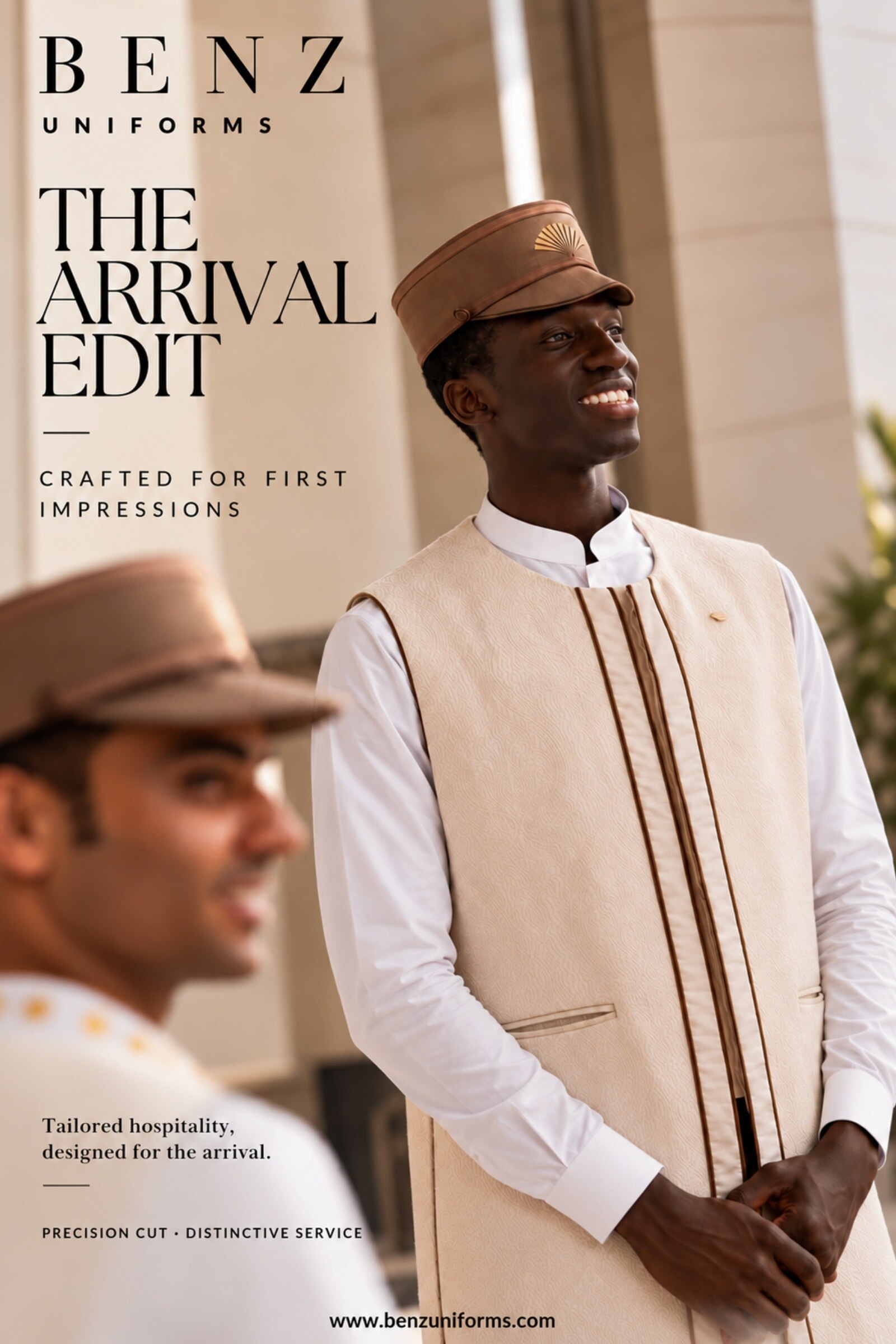
- Treat a hotel waistcoat as a removable formal layer, not permanent outdoor insulation. A removable waistcoat, jacket or decorative front panel is more practical for arrival-facing duties than a jacket worn throughout the shift.
- Reject dense fusible interlinings, foam shoulder pads and full torso linings; they block heat and vapour movement. Use partial lining, mesh back panels and lighter construction around the back and underarms.
A short-sleeve active shirt can sit beneath a formal layer when staff move between luggage work and guest arrivals. Keep the active shirt light and breathable, then add the waistcoat or jacket only for the presentation period.
How should colour, fit and visibility be tested on the job?
Pale active shirts reduce solar heat, but they expose dust, sunscreen, sweat and rain marks. Dark vs light uniform colours therefore needs a practical compromise: use dark navy or black on a removable waistcoat or jacket, not the shirt worn through driveway duty, because dark outer layers absorb more solar radiation.
This is the core of hotel uniform colour selection.
1. Run a bellboy uniform fit test on staff with different heights, shoulders, waists, hips and leg proportions, not one mannequin. Have each person reach overhead, squat, bend to lift bags, climb steps, push a loaded luggage trolley, enter and leave a vehicle, walk briskly and sit briefly.
2. Check for shoulder pulling, a choking collar, waistband pressure, restricted knees and a trouser hem that conflicts with required footwear. Repeat the movements with belts, radios, name badges and the actual shoes; pockets must not catch on luggage or create bulky insulation.
3. Assess uniform visibility around vehicles in daylight and low light. Prefer narrow piping, integrated badge mounts or sleeve details; conspicuous reflective trim and loose metal accessories can undermine a luxury presentation while adding snag points.
A concierge uniform can share brand colours and insignia with front-desk clothing without sharing its cut. Give the outdoor version a lighter active shirt, breathable construction and a removable formal layer, then approve each size after the workforce trial, not after a polished sample review.
How do you specify, maintain and replace uniforms through Hyderabad’s service cycle?
1. Turn the design into a purchase specification, not a sketch. Require a hotel uniform laundering trial using the intended commercial wash process, and record dimensional change, colour change, seam torque, pilling, fusible bubbling and badge-area damage. Set pass/fail limits before ordering.
2. Specify ISO 105-E04 colourfastness to perspiration, then add visual acceptance criteria: collars and cuffs must not curl, underarms must not show permanent staining, dark waistcoats must not develop pale sweat marks, and contrasting piping must not bleed into the shirt. Approve samples only after repeated washing.
3. Document laundering frequency by department and check drying time during both dry heat and monsoon humidity. Keep spare shirts per shift, define odour-control treatment, and treat sweat, sunscreen, dust and food stains immediately. Issue rain protection for monsoon transfers between the vehicle and lobby.
4. Build a commercial uniform replacement plan around high-occupancy periods, delayed drying and garments damaged at the vehicle side. Hold replacement stock before peak arrivals rather than waiting for a bellboy to report a missing shirt.
5. Do not describe a uniform as heat-protective, flame-resistant or high-visibility because it meets ISO 13688; that standard alone does not support those claims. Require product-specific testing for each claim.
6. A Hyderabad hospitality uniform supplier such as BENZ UNIFORMS can turn these controls into department-specific samples, wear trials and repeatable supply. The hotel must approve the specification, wash process, acceptance limits and replacement schedule.
Frequently asked questions
Why are bellboy uniforms more demanding than desk uniforms in Hyderabad heat?
Bellboys face direct sun beside vehicles while walking, lifting luggage, opening doors and pushing trolleys. Those tasks create more heat, sweat and friction than indoor desk duty.
Which fabric performs best for Hyderabad’s dry heat and humid monsoon weather?
Choose breathable, lightweight fabric that dries quickly and remains comfortable when damp. Test the actual fabric during outdoor movement rather than judging it from a desk fitting.
What should a hot-weather concierge and bellboy uniform include?
Include unrestricted movement, sweat-managing layers, secure pockets, durable areas at the shoulders and waist, and footwear that supports standing and trolley work.
How should hotels test bellboy uniform colour, fit and visibility?
Test the uniform beside parked vehicles, at the entrance and in bright sun. Check shoulder movement, trouser comfort, stain visibility and whether staff remain recognisable from a distance.
How should hotels manage uniform replacement through Hyderabad’s service cycle?
Specify spare sets for washing and monsoon drying delays, record wear at collars, cuffs and seams, and replace garments before fading, stains or damage affect guest-facing presentation.