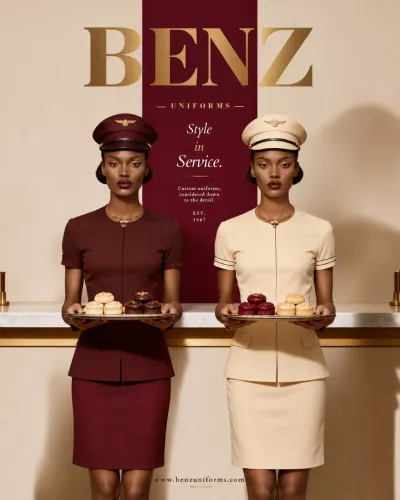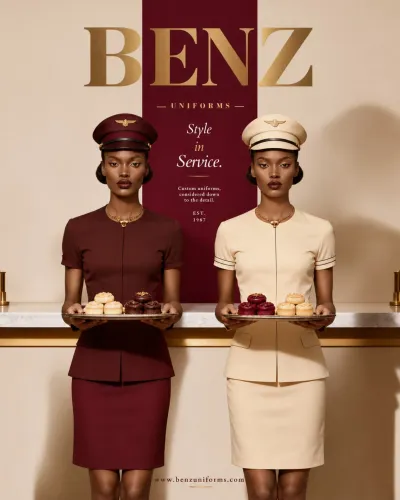

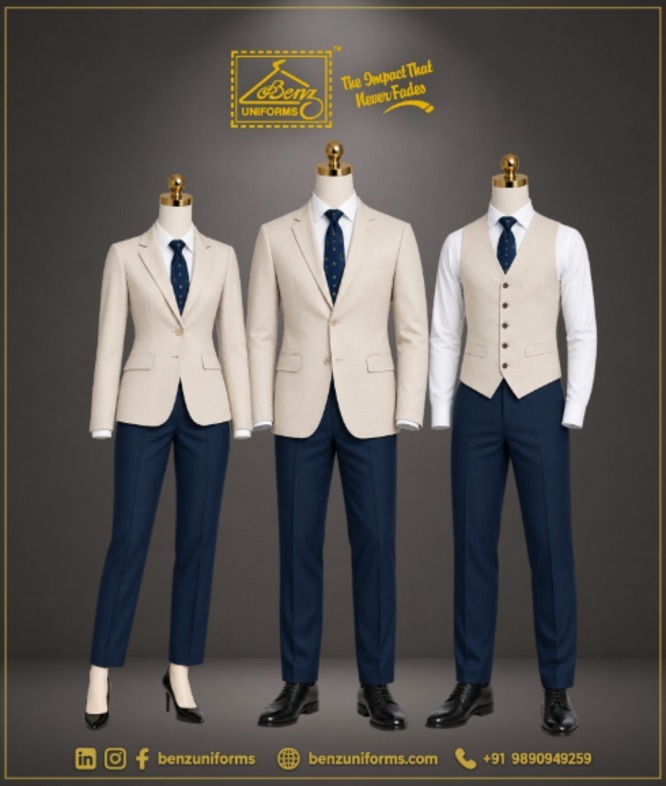
Concierge and bellboy employees are often among the first people guests notice when arriving at a hotel. Their clothing needs to be distinctive enough for immediate recognition while remaining practical for luggage handling, guest assistance, entrance duties, and extended periods of standing. Poorly planned concierge and bellboy uniforms can create problems even when the initial design looks impressive.
Hotels in Hyderabad can avoid many of these issues by examining how the uniform will function during an actual shift.
Mistake 1: Prioritising Decoration Over Movement
Traditional or luxury-inspired bellboy uniforms may include structured jackets, decorative buttons, piping, caps, and other distinctive details.
These elements can create a strong visual identity, but they should not restrict the employee's shoulders, arms, or torso while lifting and moving luggage.
A useful sample test includes reaching forward, raising the arms, bending, and handling objects rather than simply standing in front of a mirror.
Mistake 2: Ignoring Heat and Entrance Conditions
Concierge and bell staff frequently work close to hotel entrances, where temperatures can differ considerably from air-conditioned interiors.
In Hyderabad, fabric weight and garment construction should be considered carefully for these roles. An excessively heavy uniform may become uncomfortable during warmer conditions, particularly if jackets, caps, or multiple layers are involved.
Visual formality and climate comfort need to be balanced.
Mistake 3: Making the Uniform Too Similar to Other Departments
Guests should be able to recognise the appropriate employee quickly.
If concierge, front office, valet, security, and bell staff all wear nearly identical clothing, visual identification can become difficult.
Differentiation does not require completely unrelated designs. Hotels can use variations in jackets, headwear, trims, colours, or accessories while maintaining a common brand language.
Mistake 4: Selecting Impractical Colours
A colour may look attractive in a design presentation but behave differently during daily hotel operations.
Entrance-facing uniforms can encounter dust, luggage contact, outdoor exposure, and frequent handling. Hotels should therefore evaluate colour choice together with fabric maintenance and cleaning requirements.
Mistake 5: Overlooking Small Functional Details
Buttons, pocket placement, jacket length, sleeve construction, closures, and headwear fit can have a substantial impact on usability.
Pockets should be placed where they are genuinely useful. Decorative elements should remain secure. Caps should fit properly rather than becoming a constant adjustment issue.
These details are best assessed during sampling.
Mistake 6: Approving the Design Without Employee Feedback
Managers naturally evaluate brand presentation, but employees experience the uniform differently.
A short wear trial can identify restricted movement, uncomfortable seams, excessive garment weight, unsuitable pocket placement, or sizing issues before they affect an entire order.
Mistake 7: Forgetting Replacement Requirements
Distinctive uniforms can become difficult to replace if materials and trims are chosen without considering future availability.
Hotels should retain specifications for fabric, colours, embroidery, buttons, trims, and measurements. This makes future additions more manageable when new staff join or existing garments need replacement.
For hotels throughout Hyderabad, Telangana, concierge and bellboy attire can be particularly valuable in creating a memorable arrival experience, but visual impact should never come at the expense of employee functionality.
When developing these uniforms with BENZ UNIFORMS, properties can provide information about entrance conditions, staff duties, luggage-handling requirements, brand aesthetics, employee hierarchy, and desired design references.
A distinctive uniform succeeds when guests notice it for the right reasons while employees can perform their duties naturally. Testing the design against real movement, climate, maintenance, and operational requirements helps hotels achieve that balance.