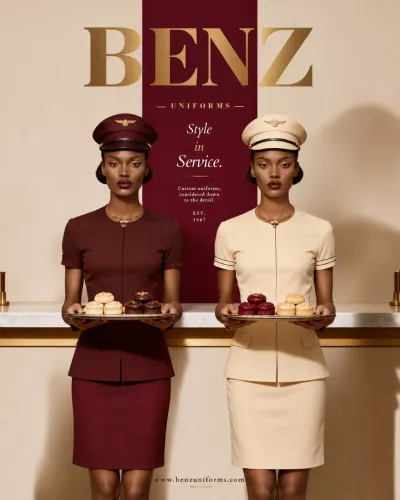

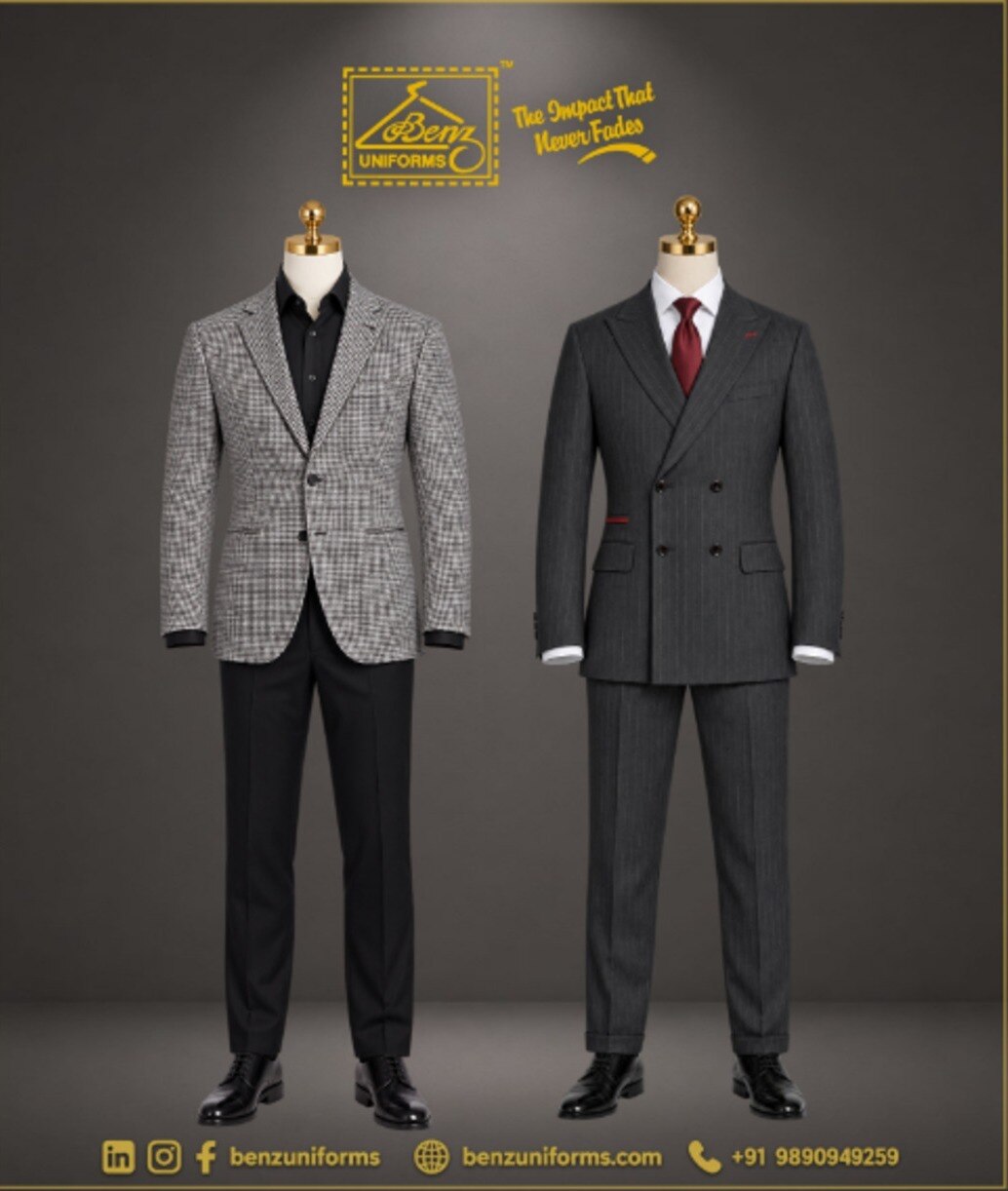
A reception blazer and a chef jacket solve different problems: one supports guest-facing presentation, while the other must cope with heat, grease, steam, sharp tools and constant movement. By the end, you will be able to assign garments by department, compare fabric and laundering specifications, and avoid treating a smart-looking uniform as safety equipment.
Key takeaways
- Choose uniforms by job hazard, not appearance.
- Use chef garments for heat, spills and kitchen movement.
- Match corporate clothing to guest-facing, low-hazard roles.
- Specify fabrics, closures and colours for commercial laundering.
Start with the job hazard, not the appearance
Choose the garment by the hazard the role faces, not by which style looks more polished. Ordinary corporate clothing and chef uniforms for hospitality are workwear, not automatically personal protective equipment (PPE).
If a garment must protect against flame, heat, chemicals or machinery, complete a risk assessment and specify the relevant protective-clothing standard; ISO 13688 gives general requirements but is not a standalone performance certification.
| Role | Main exposure | Better starting point |
|---|---|---|
| Front office, administration or management | Long wear, seating, service movement and presentation | Corporate clothing: shirt, trouser, skirt, dress or blazer |
| Kitchen production | Heat, grease, food soil, repeated washing and rapid movement | Chef uniform: chef coat, kitchen trousers and suitable footwear |
| Housekeeping or service | Bending, abrasion, spills and frequent garment changes | Task-specific workwear, not a default office suit |
This is the practical corporate uniform or chef uniform comparison: choose corporate pieces when appearance, branding and comfort during public-facing work dominate; choose a chef uniform when heat management, washable construction and movement control dominate.
A heavy corporate jacket beside cooking equipment creates unnecessary heat burden, while a chef coat at reception can undermine the intended presentation.
Do not force one specification across all hospitality team uniforms. Price each programme by usable garment life, spare stock, size availability and re-order continuity. A jacket that keeps its colour but pills, loses seam strength or shows sauce marks after commercial laundering can cost more than a higher-priced garment that remains presentable.
Corporate uniform and chef uniform: the construction differences
Fabric, cut and care separate a corporate uniform from chef uniforms for hospitality. Corporate uniform pieces use office-style fabrics such as polyester-viscose, wool blends or stretch shirting, chosen to hold a clean shape. Chef garments use breathable cotton-rich or polycotton cloth, practical twill trousers and construction that tolerates heat, grease and repeated washing.
| Garment | Fabric and heat management | Movement construction | Maintenance |
|---|---|---|---|
| Corporate uniform | Lighter suiting, shirting or knit fabrics; a blazer can trap heat beside ovens or in busy service areas | Shaped blocks, narrow armholes and fitted sleeves prioritise presentation; check reach, bending and seated comfort | Dry-cleaning or gentle laundering may apply; colourfastness does not guarantee resistance to sauce, oil or beverage stains |
| Chef uniform | Cotton-rich or polycotton jackets absorb comfort trade-offs; mesh or vent panels improve airflow but need protection from snags and grease | Longer back coverage, generous armholes, articulated sleeves and secure cuffs support reaching, lifting and bending | Built for frequent commercial laundering; check shrinkage, seam strength, colour loss and replacement availability |
Test both garments while performing the job, not only while standing still. A chef jacket that looks sharp on a model can pull across the shoulders when a cook lifts a pan, while a corporate jacket can become uncomfortable during prolonged service.
Closures and pockets also reflect risk. Chef jackets commonly use secure fasteners and limited external storage to reduce snagging; corporate pieces may use exposed buttons, breast pockets or decorative details. Treat either garment as workwear unless a risk assessment identifies a defined heat, flame or chemical hazard requiring protective clothing to a specified standard.
Match each garment to the hospitality department
Kitchen staff belong in chef coats and kitchen trousers; reception, administration and management usually need corporate clothing, while housekeeping and service need garments built for constant movement and contact with guests or rooms.
This departmental split prevents one polished office fabric from becoming sweaty in the kitchen or one hard-wearing kitchen garment from looking wrong at reception.
| Department | Recommended garment | Functional reason |
|---|---|---|
| Kitchen | Chef coat, kitchen trousers and non-slip footwear | Heat, grease, frequent washing and reaching demand breathable panels, movement allowance and secure closures. |
| Reception | Branded shirt or blouse, tailored trousers, skirt or dress; blazer for formal settings | Supports seated and standing work, guest-facing presentation and visible brand identity. |
| Administration | Shirt or blouse with trousers, skirt or dress; optional blazer | Office-style pieces suit desk work, meetings and movement between departments. |
| Housekeeping | Tunic or polo with durable trousers and non-slip footwear | Tolerates bending, lifting, cleaning chemicals and repeated laundering without loose cuffs or snag-prone details. |
| Service | Shirt or blouse with waistcoat, apron or service jacket, plus trousers or skirt | Allows carrying trays, leaning and rapid movement while making spills easy to identify and clean. |
| Management | Blazer or structured jacket with shirt, blouse, trousers, skirt or dress | Creates a sharper front-of-house look without restricting inspections or floor movement. |
Use the corporate clothing comparison to separate administration from service: both may wear shirts, but service needs stain-tolerant, movement-friendly layers. Hospitality team uniforms work best when colour and logo placement unify departments while cut, fabric and closures follow each task.
Choose kitchen garments for the actual heat and service format
Select the garment by heat source, cooking method, kitchen layout and movement—not by matching colour. A corporate uniform or chef uniform comparison should start with the task: chef uniforms for hospitality are workwear unless a risk assessment identifies a defined heat, flame or chemical hazard requiring protective clothing.
| Kitchen condition | Suitable garment choice | Check before approving |
|---|---|---|
| Open flame, chargrills or fryers | Long-sleeved, tightly woven jacket with close-fitting cuffs | Keep loose fabric away from burners; add certified heat-resistant PPE when the risk assessment requires it |
| Steam ovens or combi ovens | Breathable jacket with an opaque back vent or mesh panel | Place ventilation away from grease splash and snag points |
| High-volume prep, lifting pans or raised-arm work | Longer-back jacket with gusseted armholes and flexible sleeves | Test reaching, bending and lifting; tight armholes and short backs fail quickly |
| Compact pass or production line | Concealed closures, secure pockets and low-snag details | Check that buttons, pocket edges and vent panels cannot catch equipment |
A double-breasted front gives a clean second layer when reversed during service, but it adds weight and drying time and does not replace heat-resistant PPE.
Fit each sample while the wearer reaches, bends and carries a pan, then test its laundering route; a heavy corporate jacket that looks polished at reception becomes oppressive beside a range. ISO 13688 sets general protective-clothing requirements, not standalone heat protection.
Build a specification that survives commercial laundering
A “machine washable” label does not prove that a garment can survive commercial laundry. Specify the laundering process, test evidence and replacement plan before comparing prices.
| Specification | Compare | Require in the order |
|---|---|---|
| Fabric | Fibre blend, weight, breathability and shrinkage | State composition, fabric weight, allowable dimensional change and the ISO 15797 industrial-laundry result |
| Colour and stains | Colourfastness versus stain release | Request ISO 105-C06 colourfastness data, then separately test grease, sauce, oil and beverage marks |
| Logo | Embroidery, heat transfer, woven badge or print | Approve abrasion, colourfastness, edge security and drying or hot-press temperature limits |
| Care label | Domestic instructions versus commercial processing | Print the actual wash temperature, bleach rule, drying method, ironing limit and professional-laundry code |
| Sizing | Nominal size versus usable fit | Demand a measurement chart, graded samples, movement allowance and fitting samples for every department |
| Replacement | Unit price versus usable garment life | Record spare-stock quantities, size availability, lead time, minimum reorder and fabric or colour continuity |
For a corporate clothing comparison, test one complete corporate uniform and one chef uniform through the planned wash cycles before approving hospitality team uniforms. A dark corporate uniform can retain colour while still displaying grease; a chef jacket can remain intact yet shrink enough to restrict movement.
Ask BENZ UNIFORMS to document these limits in the purchase specification, not just in a sales sample. Cost replacements by usable garment life, including spare stock and re-order continuity; the cheapest jacket becomes expensive when it fails after a short laundry cycle.
If a garment claims protection from flame, heat or chemicals, require the risk assessment and named protective-clothing standard; ISO 13688 alone is not a performance certification.
Frequently asked questions
What is the main difference between a corporate uniform and a chef uniform?
Corporate uniforms prioritise guest-facing presentation, while chef uniforms use construction suited to kitchen heat, spills and active service.
Which hospitality departments need chef uniforms?
Kitchen teams, including chefs, cooks and food-production staff, need chef garments matched to their heat, spill and service conditions.
How should you choose a uniform for a hospitality department?
Assess the department’s hazards, movement, guest contact, heat exposure and laundering process before selecting the garment.
What should a commercial-laundry uniform specification include?
Specify fabric, colour fastness, closures, seam construction, shrinkage tolerance and care requirements that match repeated commercial washing.