
A hotel cannot manage this purchase as one generic uniform order: kitchen garments face heat, stains and industrial washing, while concierge and bellboy clothing must support guest contact, movement and outdoor exposure. By the end, you will have a department-by-department buying process covering specifications, measurements, quantities, samples, delivery and total ownership cost.
Key takeaways
- Assign department approvals before requesting supplier quotations.
- Specify chef fabrics, closures and ventilation for Mumbai kitchen conditions.
- Calculate par levels from staffing, laundry cycles and replacement needs.
- Compare delivered lifetime cost instead of garment price alone.
Set the buying workflow before requesting uniform quotations
Do not request one blended price before assigning approvals. A hotel uniform supplier needs one authorised brief covering chef uniforms and concierge and bellboy uniforms in Mumbai, but each department must approve its own working details.
- The executive chef approves coat construction, sleeve length, apron coverage, cap style and kitchen quantities. Include bakery, hot-kitchen, banquet, stewarding and cold-room roles rather than using one generic chef specification.
- The front office manager approves concierge shirts, jackets, waistcoats, ties or scarves, while the guest-services manager approves bellboy jackets, caps, badges and wet-weather replacements.
- The hotel’s brand or general manager approves colours, embroidery, logo size and placement. Approve placement separately: a chest mark on a chef coat will not necessarily remain visible or practical on a bellboy jacket, cap or shoulder badge.
- HR supplies the live employee roster, size data, joining pipeline and role-by-role par levels. Procurement checks the quantities against shifts, laundry turnaround, relief staff and replacement rates.
- Procurement and operations jointly approve the sample set, delivery sequence and receiving plan. Finance signs the commercial terms before the purchase order.
Ask each hotel uniform supplier to separate garment price from embroidery, logo application, alterations, sampling, delivery, replacement stock and GST. Require a dated sample approval, size-set approval and department-wise delivery schedule; otherwise a low quotation can conceal missing services and create shortages at opening.
Build three uniform programs, not one hotel-wide garment order
A single fabric brief fails because a chef, concierge and bellboy do not work in the same environment. Compare each program against heat, guest contact, movement, laundering and weather exposure before choosing a shared colour palette or brand mark.
| Role | Garments to compare | Working conditions | Checks before approval |
|---|---|---|---|
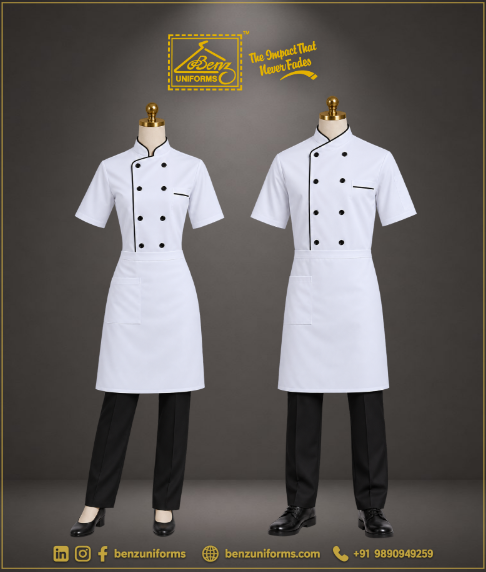
| Chef | Double-breasted coat, trousers, apron, skull cap or chef cap | Hot, humid kitchen; frequent stains; high-temperature laundering; bakery, banquet and cold-room variations | Sleeve mobility, collar comfort, sweat management, apron coverage, drying time and non-slip footwear coordination |
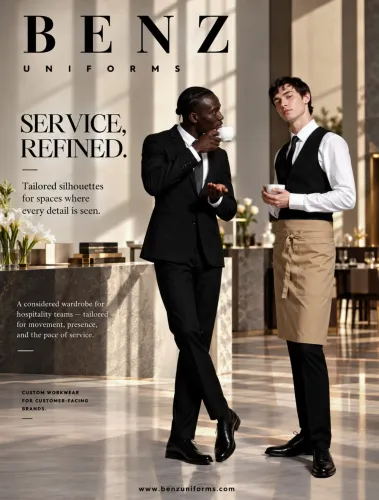
| Concierge | Jacket, shirt, trousers, waistcoat, tie or scarf | Long indoor shifts, prolonged guest contact, air-conditioned lobby and polished presentation | Breathability, seated comfort, crease recovery, pocket access and silhouette after laundering |
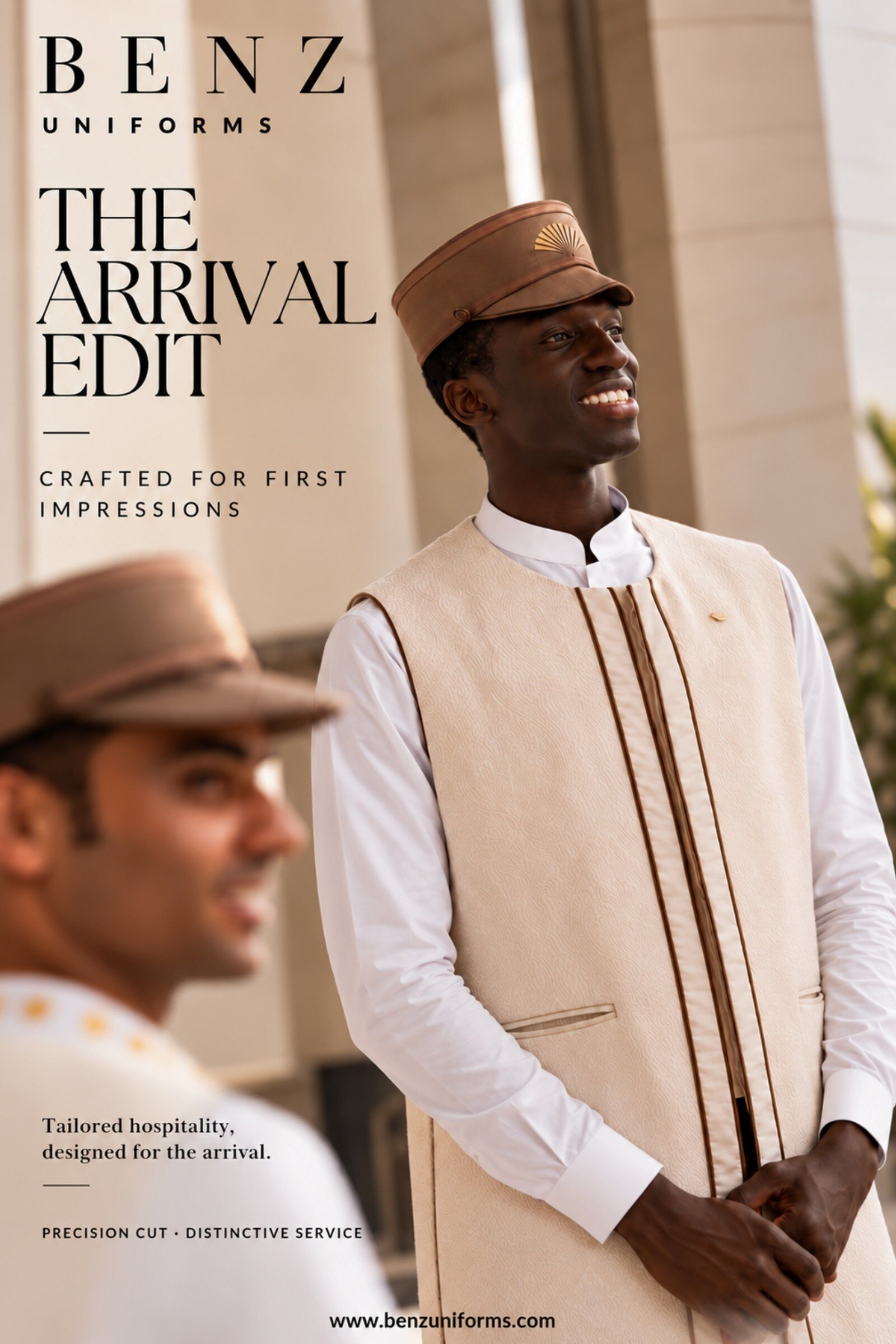
| Bellboy | Shirt, trousers, waistcoat or jacket, cap and shoulder badge | Walking, lifting, vehicle-side work, monsoon rain and intermittent outdoor exposure | Quick drying, darker lower-body fabric, unrestricted arm movement, washable accessories and wet-weather replacement |
Keep concierge and bellboy uniforms in Mumbai as separate programs even when both use navy or charcoal. Bell staff need garments that tolerate luggage handling and wet transfer points; concierge staff need a sharper finish during stationary guest interaction.
Approve logo placement by role. A small embroidered mark may suit a chef coat or concierge shirt, while a bellboy jacket, cap, waistcoat or shoulder badge needs visibility without blocking pockets or complicating laundering.
Test samples after washing and through a full shift, then price embroidery, alterations, samples, replacement stock, delivery and GST as separate quotation lines.
Write a chef uniform specification for Mumbai kitchen conditions
Specify the garment by workstation, not by the word “chef.” A chef uniform buying guide in Mumbai must record fabric composition, fabric weight, construction, wash process and replacement lead time for each kitchen zone.
| Area | Coat and fabric specification | Extra safety or wear detail |
|---|---|---|
| Hot kitchen | Double-breasted coat, cotton-rich blend, 180–220 gsm, long sleeves, stand collar, concealed studs | Heat-resistant apron covering the torso and thighs; closed, slip-resistant footwear |
| Bakery | Lightweight 100% cotton or cotton-rich fabric, long sleeves, secure cuffs | Cap or skull cap containing hair; no exposed loose trims near mixers or ovens |
| Banquet production | 180–220 gsm fabric, reinforced side seams, flexible sleeves and trousers | Full apron coverage during plating and transport; stain-resistant, colourfast finish |
| Cold room | Long-sleeve coat with thermal layer specified separately, heavier trousers and covered wrists | Insulated outer layer and slip-resistant footwear; prevent condensation from soaking the base garment |
For chef uniforms for hotel kitchens in Mumbai, add measurable fields to the purchase document:
- Collar and cuff construction, closure type, pocket count and position
- Maximum shrinkage after the stated wash cycle, colourfastness test result and drying method
- Food-safe laundering frequency, repair rules and replacement lead time
- No chest pockets that can shed items over open food; secure trouser pockets only
- Trial approval after laundering and a full humid kitchen shift, checking sweat management, sleeve mobility, collar comfort and drying time
The specification must also name who supplies aprons, caps and footwear, rather than assuming the coat covers every hygiene and slip hazard.
Measure mixed teams and calculate a workable uniform par level
A workable par is based on usage and laundry turnaround, not headcount alone. Measure every employee by department, role, chest or bust, waist, hip, height and garment length, then group sizes by shift and keep a separate pool for relief staff.
1. Build a roster by department. Record peak staffing for each shift, including chefs, commis, stewards, concierge agents and bellboys. Mark employees who work split shifts, rotate departments or require special sizes.
2. Set the clean-garment rule. If kitchen staff change coats every shift, count one coat in use plus enough coats to cover the number of laundry days before clean stock returns. For example, a two-day laundry cycle requires three coats per assigned wearer before adding reserve stock.
3. Calculate each garment separately. Chef coats, trousers, aprons, caps, concierge shirts, jackets, trousers, ties and bellboy outerwear do not share the same par. A bellboy jacket used outdoors needs a replacement reserve for abrasion; a concierge jacket needs a reserve for presentation defects.
4. Add operational reserves. Hold a size-balanced relief pool for weekly offs, leave, sudden occupancy peaks and new hires. Keep replacement stock in the most-used sizes, but review the issue register monthly rather than buying one spare for every employee.
5. Confirm the final quantity by size. Have department heads sign the roster, par calculation, reserve sizes and delivery schedule before ordering. For chef uniforms for hotel kitchens in Mumbai, match the count to heat, stains and industrial washing; increase replenishment when damaged garments regularly exceed the planned reserve.
A simple formula is: peak daily requirement × clean-stock coverage days, plus relief stock, plus a documented replacement reserve. Recalculate after four weeks of issue and laundry records.
Compare supplier quotations by ownership cost, not garment price
A low chef-coat price proves little if embroidery, alterations, GST, delivery or replacement stock appear later. Ask every hotel chef uniform supplier in Mumbai to quote the same specification and separate each cost clearly.
| Comparison item | Chef programme | Concierge and bellboy programme |
|---|---|---|
| Garment costs | Coats, trousers, aprons, caps and size alterations | Shirts, jackets, trousers, waistcoats, ties, scarves, caps and outerwear |
| Operating costs | Industrial-laundry performance, stain replacement and spare stock | Abrasion replacement, badge changes, monsoon cover and wet-weather spares |
| Service costs | Sample development, embroidery, delivery and GST | Role-specific logo placement, fittings, delivery and GST |
| Control documents | Size chart, approved sample, par level and replacement procedure | Approved sample, accessory list, par level and replacement procedure |
Compare the total six- or twelve-month cost, not just the first invoice. Apply each department’s par level and replacement rate: kitchens lose garments to heat, stains and repeated washing, while bell staff lose presentation quality through luggage contact and rain.
Before awarding a combined order, test the supplier with approved samples, a wash trial and a size-fitting session involving kitchen, concierge and bell staff. Reject a supplier that offers one fabric or logo position for all three roles; movement, pocket access, laundering and visibility differ.
Ask for batch or production records, delivery milestones, defect-replacement terms and the cost of adding two sizes later. BENZ UNIFORMS belongs in the comparison only if its sample, wash results, service terms and landed total outperform the same checklist used for every hotel uniform supplier for chef uniforms, concierge and bellboy uniforms in Mumbai.
Related products
 | Chef Uniforms Benz Uniforms: Elevate Your Kitchen with Professional Chef Uniforms At Benz Uniforms, we understand that a chef's attire is more than just... View product → |
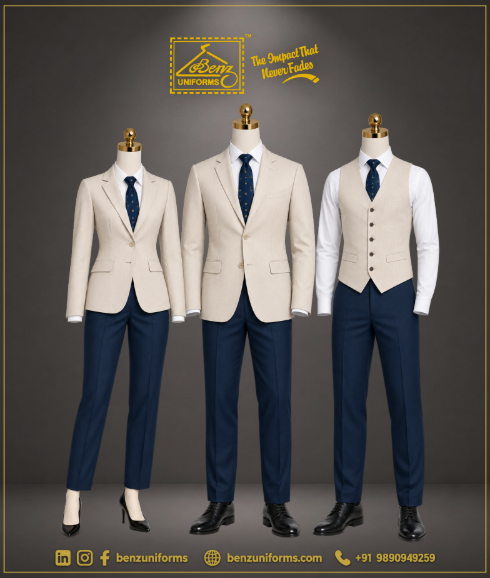 | Front Desk Uniforms Benz Uniforms: Elegant Front Office & Reception Uniforms to Make a Stunning First Impression First impressions are everything. View product → |
Frequently asked questions
Should a Mumbai hotel request one quotation for every uniform department?
Request one coordinated quotation only after assigning separate approvals for kitchen, concierge and bell desk requirements. Each department must approve its own fit, movement, fabric and appearance details.
What should a hotel include in a chef uniform specification for Mumbai?
State the fabric composition and weight, sleeve design, closure type, pocket layout, ventilation features, colour, size range and laundering requirements. Account for heat, humidity, steam and frequent washing in hotel kitchens.
How many uniforms should each hotel employee receive?
Set the par level from each employee’s shifts, laundry turnaround time, days off, stain or damage risk and replacement reserve. Calculate departments separately because kitchen and front-office teams have different change and cleaning demands.
How should hotels compare uniform supplier quotations?
Compare fabric performance, alterations, sampling, delivery, replacement availability, laundering life and maintenance effort alongside the garment price. Use the estimated ownership cost per usable wear to identify the stronger offer.