
Businesses introducing staff uniforms often need to decide between standard ready-made clothing and fully customised garments. Both approaches can work, but the best choice depends on workforce size, branding expectations, employee roles, budget, and replacement requirements.
For organisations evaluating corporate uniforms in Mumbai, understanding the practical differences can make procurement easier.
Ready-made uniforms are usually based on existing garment designs and standard sizing.
They can be suitable when businesses need straightforward clothing such as shirts, trousers, polo T-shirts, jackets, or basic office wear.
One advantage is simplicity. Because designs already exist, businesses may require fewer development steps.
Custom uniforms offer greater control over design.
Companies can choose fabrics, colours, garment cuts, trims, embroidery placement, pocket styles, collars, buttons, and other details.
Customisation may be especially useful when uniform presentation forms an important part of the customer experience.
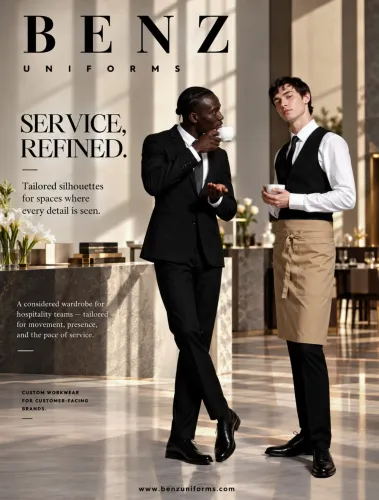
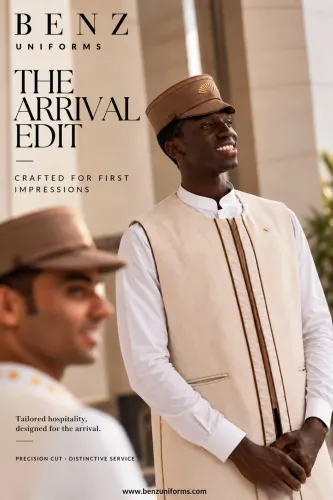
Hotels, restaurants, luxury retail businesses, facilities management companies, airlines, healthcare organisations, and premium corporate offices often require more detailed uniform programmes.
The choice can be evaluated through several factors.
Brand consistency
Companies that want uniforms closely aligned with corporate identity may prefer custom garments. Brand colours can be incorporated carefully without making clothing look excessively promotional.
Employee roles
A company with one type of employee may manage easily with standard clothing.
Businesses with multiple departments may need different garments for front office, sales, technical teams, housekeeping, security, support staff, and management.
Fit requirements
Ready-made uniforms rely on available size ranges.
Custom programmes can offer greater flexibility when a workforce includes varied body types or when tailored presentation is important.
Order quantity
Large organisations may benefit more from customised production because uniform requirements can be standardised across a significant workforce.
Smaller teams with urgent needs may sometimes prefer ready-made options.
Replacement planning
Corporate uniforms are ongoing operational items rather than one-time purchases.
Employees leave, new staff join, garments wear out, and branding occasionally changes.
Businesses should therefore ask whether the selected uniform can be reproduced consistently in future orders.
Mumbai companies also need to consider climate.
Employees who travel between offices, customer sites, factories, retail outlets, and outdoor locations may need lighter materials than teams working entirely in air-conditioned environments.
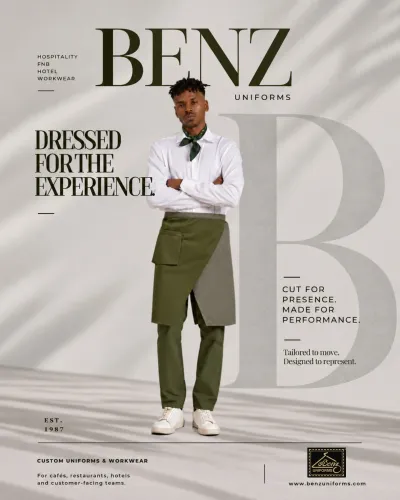
BENZ UNIFORMS serves businesses in Mumbai requiring customised corporate and hospitality garments where brand presentation and workforce practicality need to be considered together.
The most effective procurement decision is not always choosing fully custom or entirely ready-made clothing.
Some businesses use a hybrid approach. Standard shirts or trousers can be combined with customised jackets, waistcoats, scarves, ties, aprons, or accessories.
For companies across Mumbai and Maharashtra, comparing options according to employee roles, brand requirements, replacement cycles, and long-term uniform management usually provides a better decision than focusing only on initial garment cost.