
Uniform procurement can become complicated when hotels manage multiple departments, hundreds of employees, different size requirements, and strict opening or replacement schedules. A structured checklist can help purchasing teams compare suppliers more consistently.
When evaluating a hotel uniform supplier in Mumbai, procurement managers should begin by checking whether the provider understands hospitality operations rather than only garment manufacturing.
Hotels require different clothing for different roles.
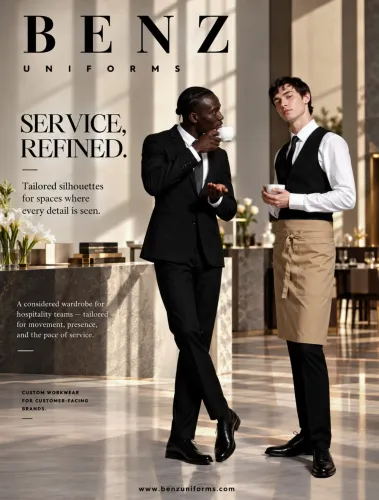
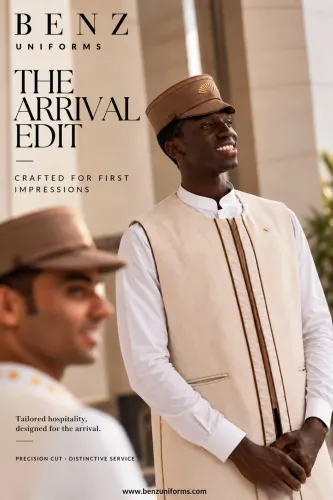
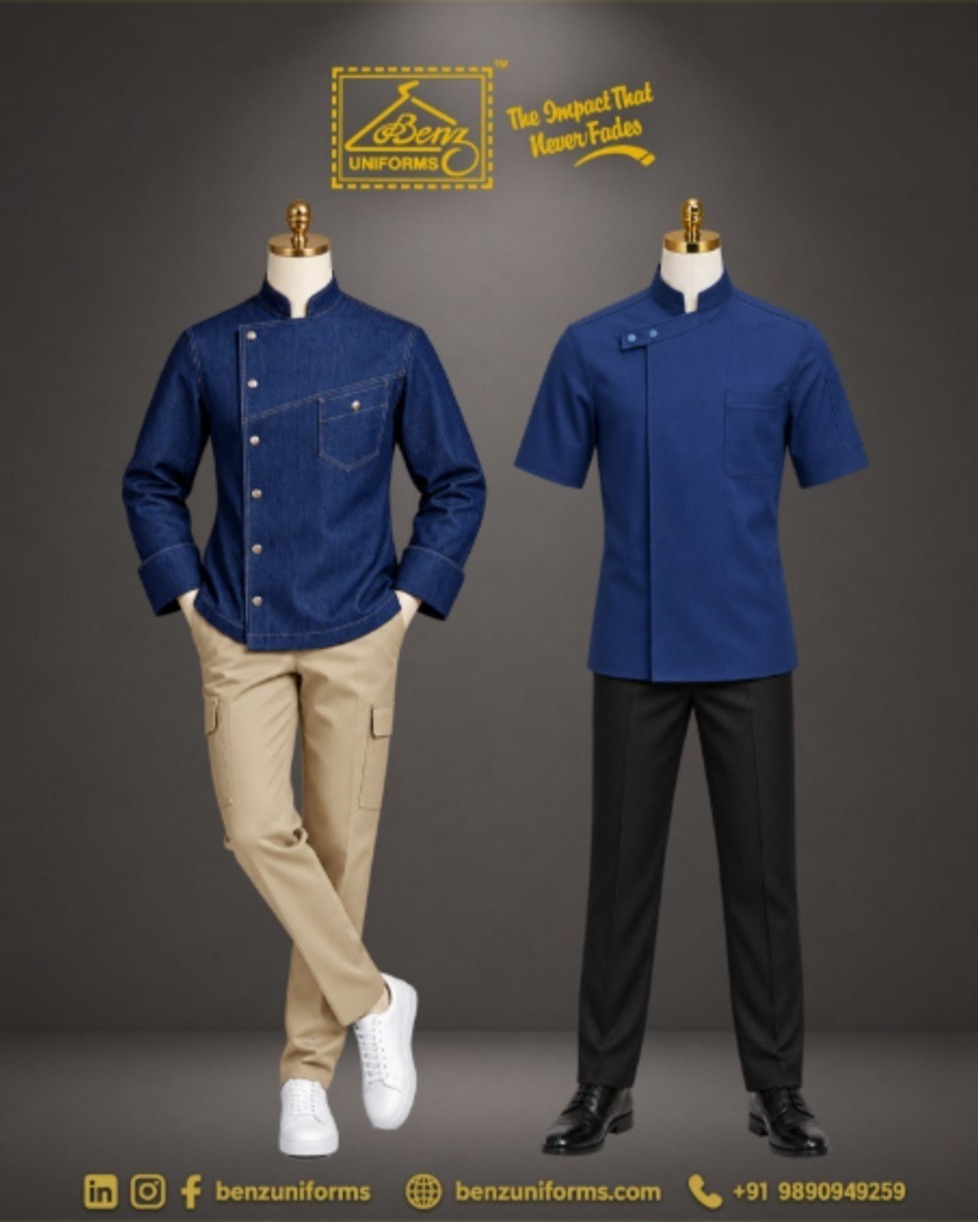
A supplier should be comfortable discussing the functional needs of reception employees, housekeeping teams, concierge staff, kitchen personnel, restaurant servers, banquet teams, drivers, and technical staff.
The following procurement checklist can help organise supplier evaluation.
1. Review Previous Hospitality Work
Ask to see examples of completed hotel or hospitality garments.
Focus on construction quality, fabric selection, styling, and department variety rather than simply the number of clients served.
2. Request Physical Fabric Samples
Fabric should be evaluated directly.
Check texture, thickness, breathability, colour, stretch, transparency, and appearance under hotel lighting.
Mumbai's warm and humid conditions make fabric comfort particularly relevant.
3. Evaluate Garment Sampling
A supplier should be able to prepare samples before bulk production.
Test the garments on actual employees whenever possible.
Check sitting, standing, walking, bending, and reaching.
4. Confirm Size Management
Ask how employee measurements will be collected.
For large teams, size distribution needs to be organised carefully to prevent production confusion.
5. Inspect Stitching and Finishing
Pay attention to seams, button attachment, zippers, pocket reinforcement, hems, embroidery, and decorative trims.
Hospitality uniforms require frequent laundering, so small construction weaknesses can become significant later.
6. Ask About Repeat Orders
Hotels regularly need replacements.
Confirm whether the supplier can reproduce the same fabric, colour, embroidery, and garment style after the original order.
7. Understand Production Timelines
Ask for realistic schedules covering design development, sampling, approval, measurement, production, alterations, and delivery.
8. Clarify Pricing
Check what the quotation includes.
Embroidery, logos, customised buttons, accessories, alterations, packaging, and delivery may be priced separately.
9. Discuss Department-Specific Requirements
Avoid assuming one fabric or garment design should be used throughout the hotel.
Different employees have different movement, heat exposure, and presentation requirements.
10. Evaluate Communication
Uniform projects involve multiple approvals and revisions.
Clear communication can prevent mistakes in colours, quantities, sizes, and specifications.
BENZ UNIFORMS works with hospitality organisations in Mumbai requiring customised uniforms for multiple hotel departments.
For purchasing teams across Mumbai and Maharashtra, the strongest supplier is usually not simply the company offering the lowest per-piece price.
Reliability, garment consistency, comfort, production control, and repeat-order capability all contribute to the long-term cost of a uniform programme.
A structured procurement checklist helps hotels compare suppliers on measurable factors and reduces the risk of making decisions based only on catalogue photographs or initial quotations.