

A manager uniform earns its cost only when it improves daily operations, not simply when it looks more polished. Use recognition speed, service mobility, laundry effort, replacement rates, and cost per wear to decide whether a dedicated uniform belongs in your restaurant’s operating model.
Key takeaways
- Measure faster manager recognition during service before choosing a uniform.
- Choose garments that allow bending, reaching and rapid movement.
- Test one uniform system across dining, kitchen and back-of-house zones.
- Compare suppliers using cost per wear, not purchase price alone.
Start with the operational case, not the appearance
A corporate uniform for restaurant managers is worthwhile when it reduces search time during service, not merely when it looks polished. Guests can identify the manager faster, staff can escalate complaints to the duty manager sooner, and a distinct layer clarifies who has authority during service recovery.
It also separates the manager from servers and kitchen staff without disconnecting them from the team.
| Operational problem | Measurable value | What to record |
|---|---|---|
| Guest cannot find a manager | Faster identification | Seconds to locate the manager |
| Complaint needs escalation | Quicker duty-manager response | Time from request to manager arrival |
| Manager handles service recovery | Clearer authority | Guest and staff recognition feedback |
| Manager blends into the team | Less role confusion | Misdirected requests per shift |
| Ad-hoc clothing is replaced midweek | Lower ownership effort | Personal purchases and replacement frequency |
A clean outer garment supports food safety when a manager handles unpackaged food, utensils, equipment, or food-contact surfaces.
The FDA Food Code model does not require a logo, particular colour, or manager-specific garment, and it sets no universal daily change interval; replace clothing when it is soiled or no longer clean, according to the operation’s risk assessment and laundry capacity. State and local adoption can differ.
The uniform does not replace handwashing, illness exclusions, glove controls, or raw-food separation. Choose it when managers remain presentable through the shift, are easier to find, and spend less time choosing or replacing clothing.
Compare the manager uniform with the alternatives
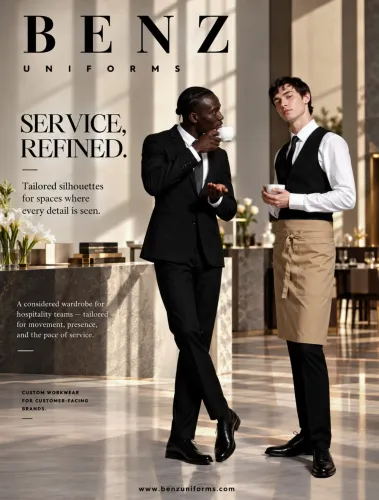
A coordinated manager uniform usually fits best: it distinguishes the decision-maker without separating that person from service. Compare each model against the manager’s actual duties.
| Option | Strength | Operational drawback |
|---|---|---|
| Corporate manager uniform | Fast recognition, controlled branding, and authority during service recovery | Poorly chosen jackets can trap heat and limit movement |
| Standard restaurant team uniform | Keeps the manager visibly part of the operation | Guests may not know who can resolve a complaint |
| Business-casual clothing | Flexible and easy to replace | Inconsistent branding and weak role recognition |
| Suit | Signals formality and seniority | Restricts movement, retains heat, and looks disconnected from active service |
| Chef coat | Works for managers cooking or working the pass | Can confuse the dining-room role and create unnecessary laundering when the manager is not cooking |
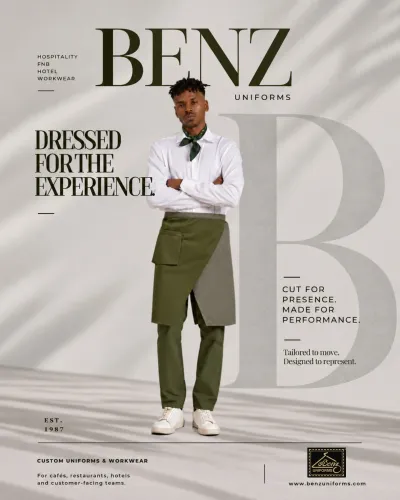
The strongest model is often a controlled variation on the restaurant team uniforms: a different layer, trim, colour value, or upper-chest badge. A branded shirt or knit base with a removable overshirt preserves team connection while allowing removal before high-soil tasks.
Build accommodation into restaurant manager uniforms rather than treating it as an exception:
- Offer approved head coverings and sleeve coverage that do not create snagging or food-contact risks.
- Provide trousers and skirts with equivalent movement for stairs, crouching, and standing.
- Specify closed, slip-resistant footwear options that suit the floor, kitchen pass, and local climate.
That approach supports recognition without forcing every manager into a suit or chef coat.
Specify the garment around movement and recognition
Specify restaurant manager uniforms around movement and recognition, not decoration. Choose a layer that stays neat during stairs, crouching, table checks, and long periods of standing while remaining visibly connected to the team.
| Option | Strength | Watch for |
|---|---|---|
| Structured shirt | Crisp, readable, easy to layer | Tight armholes and collars that press against the neck |
| Knit top | Ventilated and flexible | Pilling, fading, or an overly casual appearance |
| Overshirt | Distinctive removable layer | Heat retention and pocket distortion |
| Lightweight jacket | Clear authority and brand visibility | Restricted reach, lining heat, and difficult laundering |
Use a collar with enough structure to hold its shape without touching the throat. Specify trousers with stretch and a comfortable rise, or skirts with safe stride room and no restrictive back slit; both must work with required closed-toe, slip-resistant footwear.
Place the name badge on the upper chest, not below an apron or at the waist.
- Keep brand colours visible in trim or panels, but avoid placing pale colours where sauce and grease show immediately.
- Add stable pockets for a radio, pen, keys, order pad, or small tablet; reinforce openings so weight does not pull the garment out of shape.
- Distinguish the manager through a layer, trim, badge, or colour value while retaining the team’s visual language.
Decorative buttons come after reach, ventilation, and access. Long sleeves or stain-resistant fabric are not PPE; use an OSHA hazard assessment and specify actual PPE separately. If loading or traffic exposure creates a visibility hazard, name the applicable ANSI/ISEA 107 garment type and performance class instead of relying on bright corporate colour.
Test one system across every service zone
One garment can cover breakfast, lunch, dinner, outdoor seating, banquets, bars, kitchen-pass checks, and receiving only if it survives a full representative shift. Reach across a table, bend to inspect a low shelf, carry a tablet and radio, move between dining room and kitchen, sit briefly, climb stairs, and work without losing shape or comfort.
Compare the options before standardising:
| Option | Strength | Risk |
|---|---|---|
| Heavy formal jacket | Strong visual authority | Heat retention, visible stains, difficult laundering |
| Branded shirt or knit base | Ventilation, easy movement, simpler washing | Less formal without a second layer |
| Layered system | Remove the overshirt or jacket before high-soil tasks | Requires coordinated pieces and storage |
Check fabric weight, lining, ventilation, stain visibility, wrinkle resistance, laundering temperature, drying method, and pressing requirements. A heavy jacket can become a liability for a manager moving from guests to a hot kitchen pass or receiving dock.
Specify by work zone, not job title:
- Front desk and dining room: prioritise presentation, pockets, and low-wrinkle recovery.
- Kitchen pass and housekeeping-adjacent areas: prioritise ventilation, abrasion resistance, and easy washing.
- Loading dock or traffic area: assess visibility separately and specify the required ANSI/ISEA 107 garment type and performance class.
Corporate hotel uniforms face different heat, stain, abrasion, and visibility demands across these zones. Test the corporate uniform for restaurant managers in Mumbai heat and humidity, or the relevant local climate, before approving one pattern. A clean garment supports hygiene but never replaces handwashing, glove controls, illness exclusions, or raw-food separation.
Calculate cost per wear and run a controlled pilot
A pilot is financially worthwhile only when its cost per wear and operating results beat the current clothing model. Calculate it as (garment price + embroidery or other branding + alterations + laundering + repairs + replacement) ÷ expected wears, then compare it with unplanned personal-clothing purchases.
| Option | Recognition | Service fit | Main cost risk |
|---|---|---|---|
| Corporate hotel uniforms | Clear manager role | Brand distinction across zones | Complex care or low durability |
| Restaurant team uniforms | Strong team connection | Familiar, but weaker manager distinction | Extra layer or badge needed |
| Business-casual clothing | Inconsistent | Flexible movement | Repeated personal purchases |
| Suit or chef coat | Formal or kitchen-specific | Poor fit for mixed floor duties | Heat, restriction, or unnecessary laundering |
Run the pilot across breakfast, lunch, dinner, banquets, outdoor seating, kitchen-pass checks, and receiving. Record manager and guest recognition time, end-of-service appearance, comfort complaints, laundry failures, replacement frequency, and personal-clothing purchases.
Test samples using your actual wash chemistry, temperature, drying method, and press process. ISO 15797 can inform industrial-washing and finishing tests, but it does not guarantee survival in your laundry.
Put the approved care process and prohibited treatments into the specification before production. Do not treat an antimicrobial finish as a food-safety control; handwashing, illness exclusions, glove controls, and raw-food separation still govern hygiene.
BENZ UNIFORMS can be considered alongside other suppliers when it can document a coordinated hospitality programme and test garments through your process. Place the larger order only when the pilot shows lower ownership effort, acceptable comfort, and faster operational recognition.
Frequently asked questions
Why use a corporate uniform for restaurant managers?
A distinct manager uniform helps guests identify the duty manager, helps staff escalate issues faster and clarifies authority during service recovery.
What should restaurant managers wear during service?
Specify garments around movement and recognition, including comfortable fabrics, practical closures and a visible distinction from restaurant team uniforms.
Should one manager uniform work across every service zone?
Test the system in the dining room, kitchen pass, back-of-house areas and outdoor zones to confirm comfort, safety and recognisability.
How do you calculate the cost of restaurant manager uniforms?
Divide the garment’s total ownership cost by expected wears, including purchase, laundering, repairs, replacement and administrative effort.