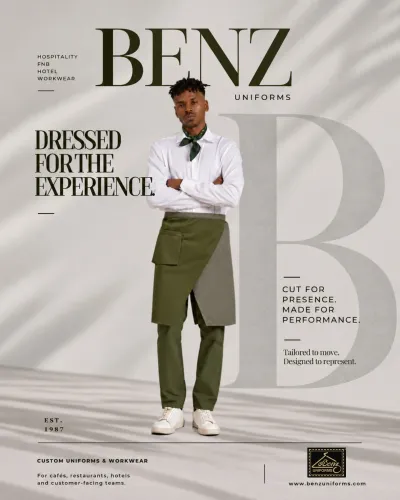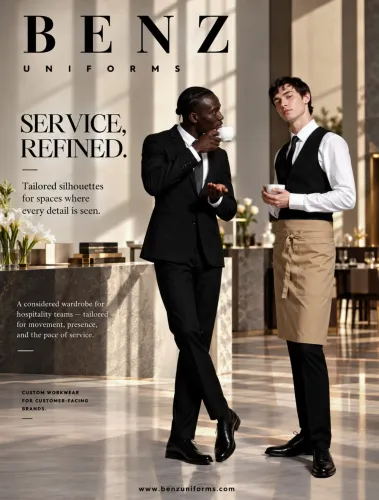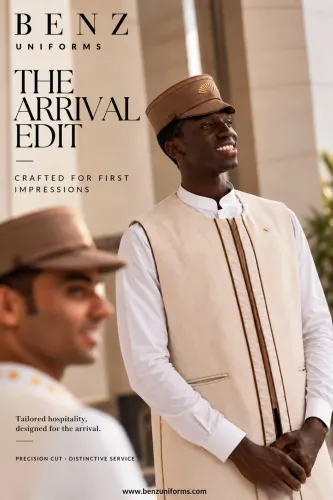

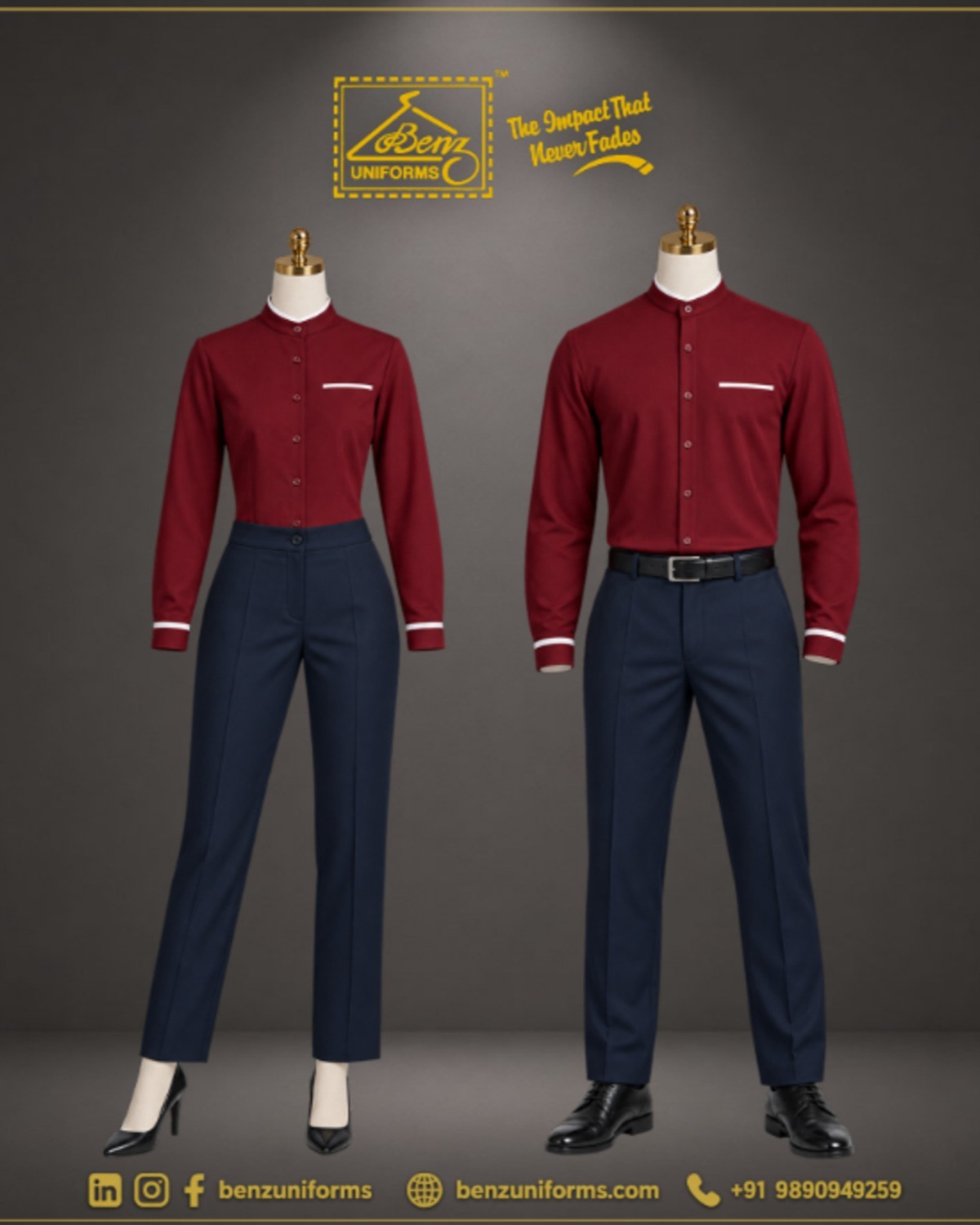
Luxury hotels compete on details. Guests notice the lobby fragrance, lighting, table settings, staff behaviour, room presentation, and even the way employees are dressed. This makes uniforms for 5-star hotels in Mumbai an important part of the overall guest experience.
Premium hotel uniforms do not necessarily need excessive decoration. In many cases, refinement comes from consistency, fit, fabric quality, subtle detailing, and thoughtful coordination across departments.
The first principle is alignment with the hotel's visual identity. A contemporary business hotel may prefer clean tailoring and neutral colours, while a heritage property may incorporate traditional Indian influences. Resort properties might use lighter fabrics and relaxed silhouettes.
Luxury uniform design should therefore begin with the property itself.
Hotels should evaluate:
Interior colour palette
Architecture
Brand positioning
Guest profile
Service style
Restaurant concepts
Local cultural influences
Fit is one of the strongest contributors to a premium appearance. Even expensive fabric can look ordinary when garments are too loose, too tight, or poorly proportioned.
A structured sizing process helps achieve consistency across the team. Certain guest-facing roles may also benefit from individual alterations, particularly for jackets, waistcoats, formal trousers, and skirts.
Details can elevate an otherwise simple garment. Carefully selected buttons, piping, embroidery, contrast stitching, scarves, ties, lapel styles, or accessories can create visual distinction without making the uniform look theatrical.
For Mumbai hotels, climate suitability must remain part of the design process. A highly structured uniform that looks impressive during fitting may become uncomfortable when employees spend long periods near entrances, outdoor areas, banquet spaces, or service corridors.
Premium should therefore mean appropriate, not merely elaborate.
Department differentiation is also important. A 5-star property may have several guest-facing teams, including reception, concierge, guest relations, bell desk, restaurant service, banquets, housekeeping, spa, security, and drivers.
Guests should be able to identify these teams while still recognising that they belong to the same hotel.
This can be achieved by maintaining consistent design language while adjusting garment styles according to role.
For example, reception staff might use tailored jackets, concierge employees distinctive coats, restaurant teams waistcoats, and housekeeping personnel coordinated tunics. Shared colours or detailing can connect the entire programme.
Maintenance standards also affect the premium look. Hotels should create guidelines for pressing, cleaning, footwear, accessories, name badges, and uniform replacement.
Even the best garment eventually loses its original appearance after repeated use. Planning replacement cycles helps prevent worn clothing from affecting brand presentation.
For luxury hotels across Mumbai and Maharashtra, uniforms should support the broader hospitality environment rather than compete with it. Effective design feels natural within the property and allows employees to perform confidently.
A premium hotel uniform programme succeeds when guests notice professionalism without feeling that the clothing itself is trying too hard to attract attention.